

By Bassey Udo

Economists, policymakers and capital market experts on Thursday proffered deliberate strategies to turn the gains of Nigeria’s economic reforms into jobs, wealth and better living standards for the people, warning that macroeconomic stability alone cannot guarantee shared prosperity.
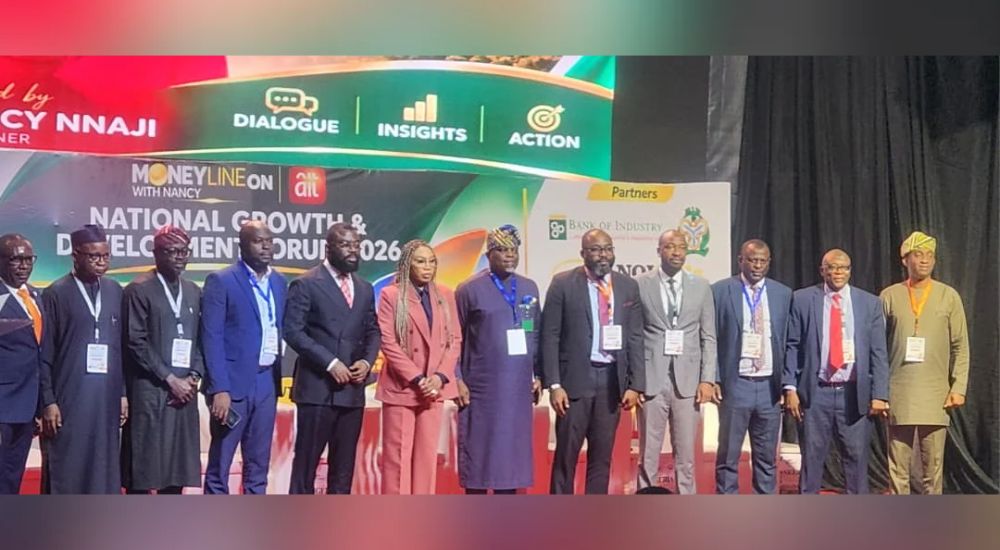
They spoke in Abuja at the 2026 National Growth and Development Forum organised by Moneyline with Nancy on African Independent Television (AIT) on the theme: “The Nigeria We Want: The Economy, Your Money, Our Future.”
Speakers who delivered goodwill messages to the event included the President of the Nigerian Economic Society (NES), Dr Baba Yusuf Musa; the Special Adviser to the President on Economic Affairs, Dr. Tope Fasua; the President of Capital Market Academics of Nigeria, Prof. Uche Uwaleke, and the Managing Director of the Bank of Agriculture, Ayodeji Sotinrin.
In his speech, Musa placed emphasis on fiscal discipline by political leaders and all tiers of government in the run up to the February 2027 elections to protect the gains of the ongoing reforms.
Noting that election years in the past have traditionally brought heavier political spending and pressure on public finances, Musa said previous cycles raised concerns about public resources being diverted to political activities, while decisions on fiscal policies were driven by short-term electoral interests.
“As we approach the 2027 elections, I appeal, respectfully, but earnestly, to all stakeholders, across every party and every tier of government, to protect these hard-won gains from reforms through fiscal discipline and policy continuity,” Musa said.
“Sound economics should be the common ground on which all who aspire to lead this nation can stand. Debt is a financing instrument, not a development strategy,” he declared.
He urged that every Naira of public spending should seek to provide answers to three questions: “What problem will it solve? Who will benefit? And how will we know it worked?”
Musa acknowledged the tough decisions by the Tinubu administration, namely petrol subsidy removal, foreign exchange market unification, bank recapitalisation and the overhaul of tax laws, although he described them as necessary to ensure economic stability and growth.
He cited the signs of improvements in the system by way of economic growth of 4.43 per cent in the second quarter of 2026; improved headline inflation of 14.06 per cent in October; growing external reserves of about $55bn., and a cut in the monetary policy rate from 26.5 to 23 per cent.
However, he said the ultimate test of the reforms was their effect on citizens’ lives, pointing out that the gains were yet to impact the lives of many Nigerians.
“Macroeconomic stability is necessary, but it is not yet shared prosperity,” he said, adding that “a stable exchange rate is not yet a full dinner table”, while “stability is the foundation, not the building.”
Citing World Bank estimates, Musa said about 63 per cent of Nigerians, or about 140 million people, were still living below the poverty line in 2025, adding that food inflation, weak industrial growth and the large informal workforce were evidence of the gap between improved indicators and everyday experience.
He proposed five pillars for achieving the citizens desire of a strong Nigeria, namely ensuring growth that creates jobs for the poor; provision of affordable credit, or money that works for the people; running an economy that produces what the people consumes and exports; developing an investment in human capital, and ensuring disciplined public finance backed by credible institutions.
Better agricultural productivity, through storage, rural roads, irrigation, security and access to finance, he said, was critical to cutting poverty and escalating food prices.
He emphasized the need for reliable electricity supply, efficient ports, security of trade routes and enforceable contracts to allow Nigerian businesses to compete under the African Continental Free Trade Area (AfCFTA).
Besides, he proposed a national development pact among government, businesses, universities, the media and citizens, with each committing to measurable contributions towards the country’s development and growth.
Progress, he noted, would be tracked through indicators on household incomes, employment, education, healthcare, electricity and poverty reduction.
“We must replace the politics of short-term applause with the economics of long-term results,” he said.
On his part, Dr Fasua stoutly defended the Tinubu administration’s record in trying to ensure economic development and growth.
“If you don’t build a strong macro-economic system, you can’t go anywhere with the micro,” he said, arguing that removing subsidy from the fuel pricing template in the country and adjusting the foreign exchange regime helped significantly in addressing structural weaknesses that benefited a privileged few.
The old subsidy arrangement, he noted, drained about $15bn from the economy annually, while multiple exchange rates created room for arbitrage by those with privileged access to foreign exchange.
He said the reforms were restoring key fundamentals, citing better foreign exchange access for manufacturers, rising reserves and growing domestic investments in key sectors of the economy as the improving indicators giving grounds for cautious optimism.
A stronger naira, he cautioned, could be sustained only through productivity, exports, investment and confidence in the monetary system, not administrative controls.
Dr Fasua also warned against heavy reliance on cash transfers and monetary financing, citing the previous administration’s huge Ways and Means advances, which served as a drain on the country’s scarce resources.
The Presidential Adviser urged Nigerians to become investors rather than largely consumers, saying national development could not be outsourced to foreign partners.
Nigeria, he insisted, was not short of opportunities, rather lacked enough confidence, information, imagination and determination to seize them, highlighting opportunities in agriculture, manufacturing, housing, transportation, healthcare, education, technology, oil and gas, real estate, tourism and the creative economy as sectors for wealth creation.
Urging Nigerians to invest in shares, businesses, property, agricultural technology and skills rather than wait for foreign investors to discover opportunities at home, he called for more local processing of raw materials, warning that a country cannot prosper by exporting primary commodities and importing finished goods.
Young Nigerians, he advised, should not see migration as the only route to success, stressing the need for wider adoption of artificial intelligence potentials and more investment in human capital development.
In his contribution, Prof. Uwaleke underlined the importance of widening access to the capital market, saying the success of reforms should not be judged only by GDP growth, exchange rate stability, government revenue or reserves, rather by whether they create jobs, raise purchasing power and reduce poverty.
Although the capital market recorded year-to-date returns of above 60 per cent, reflecting stronger investor confidence, Uwaleke asked how those opportunities could be made accessible to ordinary Nigerians to spread wealth.
A buoyant market, he said, should not be the preserve of institutions and wealthy individuals, rather it should mobilise domestic savings, finance productive enterprises and broaden economic participation.
He cited the recent Dangote Refinery’s initial public offering as an example of efforts to widen access to wealth creation, and called for more such opportunities by other investors.
For Sotinrin, affordable agricultural financing, mechanisation and improved seeds to raise productivity and strengthen food security were ingredients for sustainable economic development and growth.
In her introductory remarks, the convener of the Forum and Executive Producer of Moneyline with Nancy, Nancy Iloh-Nnaji, said the event was designed to close the gap between policy decisions and the understanding of ordinary Nigerians towards sustainable growth and development of the country.
Economic discussions, she said, should go beyond statistics to address food prices, school fees, borrowing costs, employment and business opportunities, adding that pragmatic journalism practice should help connect citizens to relevant information, ask questions on their behalf and hold institutions accountable.
She named access to development finance and financial literacy as areas needing urgent attention, wondering how entrepreneurs with viable ideas but little collateral, business history or influential connections could access funding from development finance institutions.
The Bank of Industry, the Nigerian Export-Import Bank and the Bank of Agriculture, she said, must make their financing options, eligibility requirements and application processes better understood by the people, particularly the micro, small and medium enterprises.
She also called for wider awareness of savings, investment, insurance, retirement planning and consumer protection, warning that financial knowledge should not be reserved for the wealthy, especially as inflation continues to erode household incomes.
Mrs Iloh-Nnaji urged participants to keep engaging beyond the forum, saying Nigerians needed not only to understand the economy, but also to participate meaningfully in it.

