

By Bassey Udo

Former President, Goodluck Jonathan, says a nation’s brand should reflect its character, quality of leadership, development and the kind of country the citizens want to bequeath to its children and posterity and not the current political system that prioritizes obscene wealth accumulation and craze for power.
Jonathan who was the keynote speaker at the third edition of the annual The Paul Alaje Colloquium (TPACOLLOQUIUM) with the theme, “The Brand Nigeria” on Saturday in Abuja, said a nation’s brand is not what the government says, but what the people experience in terms of their quality and standard of living.
Lamenting the deteriorating image and reputation of the country at the global arena, Jonathan said a nation’s brand must equate its national identity, reputation and standing among the comity of nations.
“A nation’s identity is what the world thinks about and sees about us, based not merely on our claims, but on our conduct, institutions, achievements, and the experiences of our citizens”, he said.
Jonathan who expressed concern over the kind of political practices in the country he described as inconsistent with globally acceptable democratic norms and principles, warning that the country risked retrogression if nothing was done to change.
“Some of what goes on in our political space does not represent democracy. The brand of politics we are playing will set us backwards. Democracy has standards,” he said.
He said some of the political figures in the country do not take time to understand their parties’ manifestos, as they rely rely on the services of consultants to prepare the contents of such policy documents, saying this was why they are unable to properly articulate the people’s needs and priorities.
The former President, who set a record as the first president in Nigeria’s history to refuse to contest the outcome of the 2015 elections after his opponent was declared the winner by the electoral body, despite being the incumbent, criticised the do or die mentality of today’s politicians who encourage young Nigerians to kill, maim, destroy property, and unleash violence to keep them in power.
He said leaders who genuinely love the country must always be prepared to make sacrifices to protect the lives and property of citizens, adding that no politician should encourage young people to destabilise their communities simply to become governor or president.
Cautioning politicians against prioritizing their personal ambitions over national peace and security, Jonathan said anyone who genuinely loves the people would not want their state or country to thrown into political crisis.
He said such unwholesome conduct was among the factors contributing to Nigeria’s deteriorating international reputation, apart from the issue of insecurity, corruption, unemployment, economic difficulties, political instability and negative perceptions of public institutions.
Recalling that Nigeria, which once commanded considerable international respect and influence, is now struggling with an image that did not reflect the enormous talent and potential of its people, adding that the country’s poor reputation abroad was increasingly undermining the confidence in its institutions as well as weakening its standing among the comity of nations.
Pointing out that the issue was not a result the dearth of capable and talented Nigerians, but the country’s failure to translate its human potential into building credible public institutions, responsible political leadership that ensures sustainable national progress.
He called for the restoration of integrity, discipline, hard work and patriotism in the country’s politics if the country’s battered image and reputation were to be restored.
Urging families, schools, religious institutions and community leaders to teach young Nigerians about the virtues of genuine success through honest and productive means, Jonathan called for stronger governance, transparency, accountability and respect for the rule of law among public office office holders whom he said must see the offices as a position of trust.
On political reforms, Jonathan called for stronger internal democracy within political parties, credible elections and a leadership recruitment system that rewards ideas, character and competence rather than money and sectional interests.
Nigeria, he said, must learn from countries like Singapore, India, South Korea and Malaysia that have successfully transformed their economies through the selection of credible and purposeful leadership.
Jonathan said that what Nigeria needs at the moment were strong institutions capable of identifying, nurturing, rewarding, and retaining talented people, adding that public appointments should be based on merit and competence, while public resources must be managed responsibly.
The former President also called for a secure, productive economy capable of creating jobs, encouraging businesses, and improving citizens’ living conditions.
He identified education, healthcare, agriculture, manufacturing, technology and infrastructure as areas that required sustained investments and attention.
Earlier, Justice Mabel Segun-Bello of the Federal High Court, Abuja spoke about how her effort to digitalise the country’s court processes in the issuance of court affidavit has helped build a credible record-keeping system as well as rebrand the country among Embassies and other institutions in the country.
She said at inception, her review the files of some staff due for disengagement showed that their certificates and age declarations were nothing to write home about.
In one case, she said one person’s service records appeared so distorted that it showed that the person completed completed his Standard Six at the age zero before joining the service.
However, she said that following the digitalization of the filing system, it was possible to see the past records and certificates of workers in their correct state, without the manipulation that characterized the system before her.
In his speech at the occasion, the convener of the colloquium, Dr Paul Alaje, said Nigeria could not advertise its way into prosperity without building credible institutions, productive industries and an economy capable of improving the lives of its citizens.
He said Nigeria must move beyond publicity campaigns in an effort to brand it, but to concentrate on addressing the weaknesses affecting its socio-economy and political institutions.
The most powerful national branding strategy, he noted, was in having a country that works for the people, insisting the cannot market what it has not built.
“We cannot communicate our way out of institutional weaknesses. We cannot advertise our way into prosperity,” he said.
Alaje, who described national reputation as an economic asset, said a country’s image influences investment, trade, tourism, capital flows, talent retention and the cost of doing business.
He explained that credible institutions encourage investors to commit capital, while predictable policies allow businesses to plan and functional infrastructure improves productivity, adding that insecurity, corruption, uncertainty and policy inconsistency increase the cost of doing business, discourage investment and encourages capital flight and migration of skilled workers out of the country.
Alaje is an economist and Professor of Economics and Finance, urged the country’s leaders to build an economy that rewards production, promotes value addition, innovation, and competitiveness rather than relying too heavily on commodity earnings.
He called for stronger manufacturing, processing, export capacity, and domestic value creation, pointing out that Nigeria’s international reputation should reflect the competitiveness of its industries, not merely the size of its population and market.
Alaje also said the success of economic reforms should be measured by their impact on jobs, purchasing power, business expansion, productivity, and Nigerians’ living standards, noting that although improvement in the macroeconomic indicators was important, the benefits must reflect in lives of households and businesses.
He identified five areas requiring urgent attention to fix the Nigeria’s national identity and economic prospects, namely healthcare, governance and security, the creative economy, artificial intelligence, and the economy and investment.
On healthcare, Alaje who said no country could build a strong national reputation while its citizens struggle to access quality medical services, described healthcare as economic infrastructure, arguing that a healthy population was essential for productivity.
On governance and security, Alaje called for credible institutions, accountability, the rule of law, and effective public service, adding that security must be a reality Nigerians experience rather than something confined to policy documents.
He stressed the need for intellectual property protection, access to finance, infrastructure and international distribution networks for creative professionals to allow them compete effectively in the global market.
On artificial intelligence, Alaje warned that Nigeria could not afford to remain merely a consumer of technologies developed in other countries.
He urged investment in young people’s skills, innovation and the country’s capacity to create value in the global digital economy.
On investment, he said businesses and investors needed clear rules, dependable institutions and an environment where opportunities could be pursued with confidence.
Alaje outlined five commitments for national development, including making productivity a central priority, rebuilding institutional trust, investing in human capital, supporting Nigerian businesses and establishing a consistent national development vision.
He said these responsibilities should not depend on government alone, but should involve the private sector, universities, professional bodies, civil society, traditional institutions, the media, and citizens.
“Restoring the Nigeria brand requires more than slogans and publicity campaigns. It requires a national commitment to changing the realities that shape our reputation.
He identified four areas the country must pay attention to in its effort to rebrand Nigeria.
“First, we must restore integrity, discipline, hard work and patriotism as fundamental national values. Our homes, schools, religious institutions and communities must teach young Nigerians that genuine success must be achieved through honest and productive means.
“Second, we must strengthen leadership and governance. Public office must be regarded as a position of trust. Merit, competence, transparency, accountability and the rule of law must guide public administration.
“We must reform our political and leadership recruitment processes. We must strengthen internal party democracy, electoral credibility, and a more inclusive political culture and reward ideas, character, and competence rather than money, patronage, and sectional interests.
“Third, we must build a secure and productive economy that creates employment, encourages enterprise and improves the living conditions of our people. Education, healthcare, agriculture, manufacturing, technology and infrastructure must receive sustained attention.
“Fourth, we must invest in our cultural, sporting and professional assets. Afrobeats, Nollywood, our literature, fashion, football and other sporting achievements demonstrate the power of Nigerian creativity. We must support these industries and use them more effectively for cultural diplomacy and economic development.
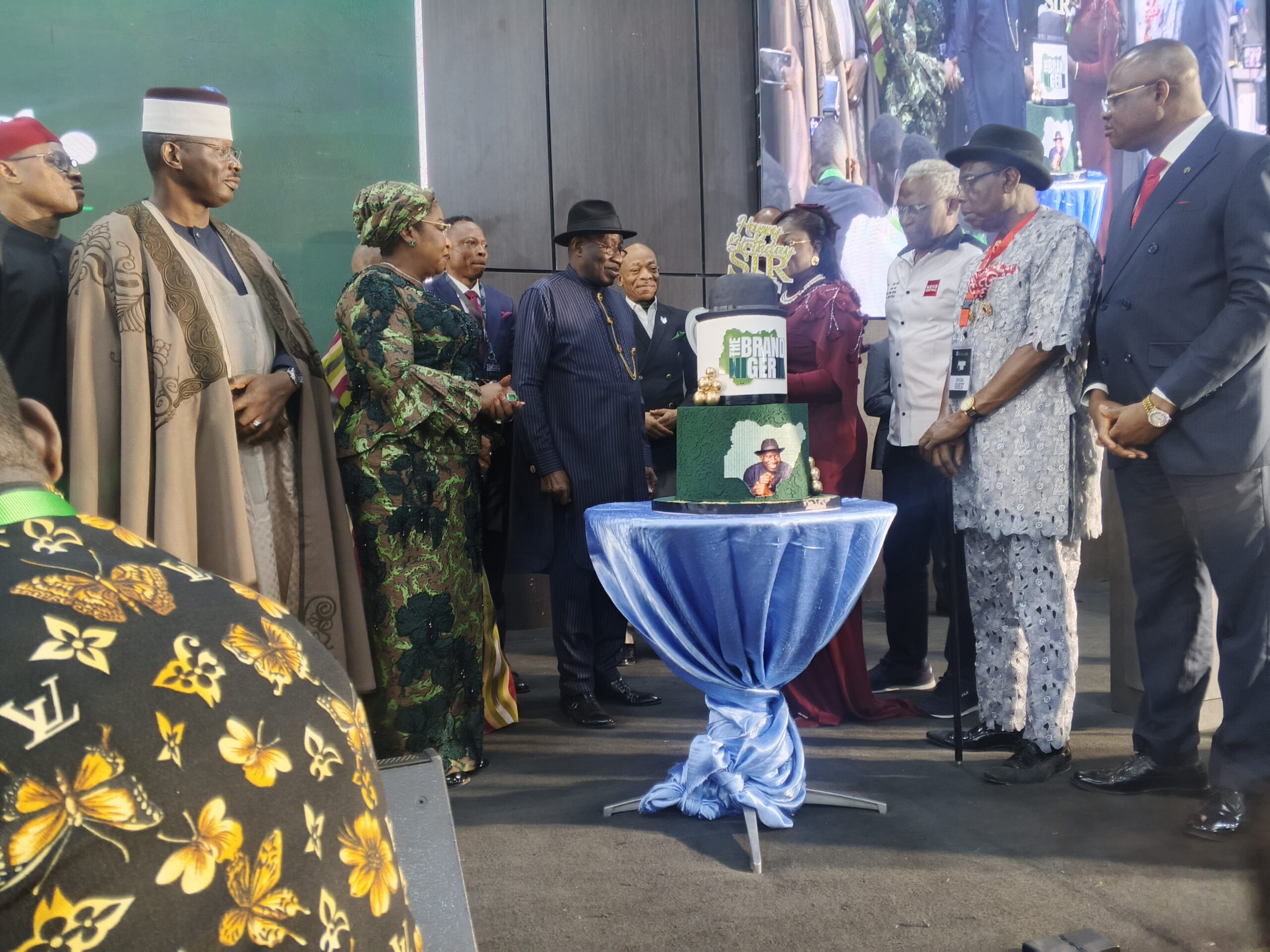
Participants used the occasion to cut the 69th birthday cake to celebrate the former President who celebrate the former President.
