
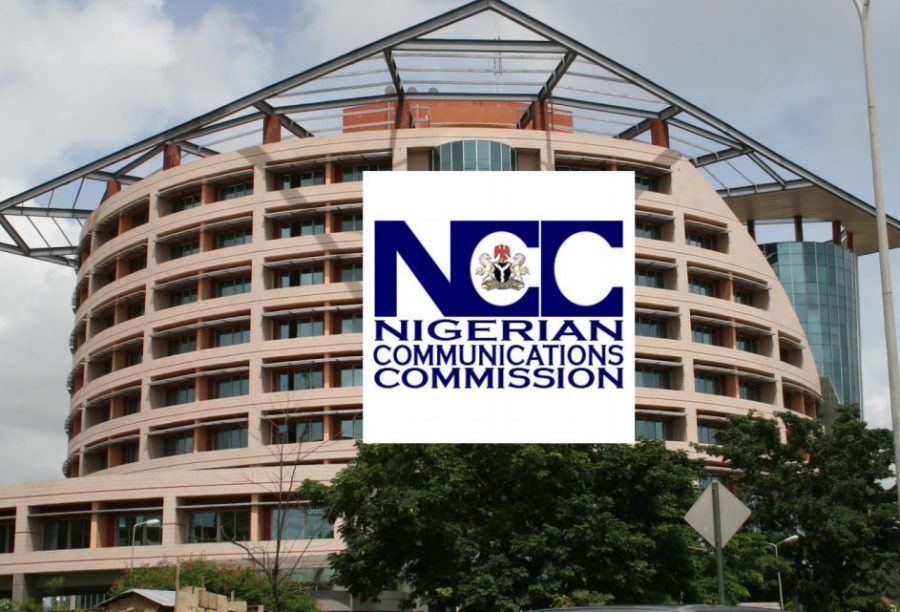
The Nigerian Communications Commission (NCC) says its Refrigerated Data access to educational platforms and content initiative would expand access to learning resources, bridge educational inequalities and support the country’s long-term economic growth by investing in human capital.

The Zero-Rated Data Access to Educational Platforms and Content, which aligns with Nigeria’s broader digital economy objectives, was launched on Thursday as a coordinated national approach to improving affordable and equitable access to digital education across Nigeria.
Under the initiative’s Operator-Sponsored Model, eligible users would receive up to 100 megabytes of free daily data allowance to access designated educational
platforms.
With the initiative, a learner receiving the free 100MB would enjoy about
700MB of educational data each week, roughly 3GB every month, and up to 36.5GB annually.
The Executive Vice Chairman of NCC,
Dr. Aminu Maida, explained at the launch of the programme that the initiative, which provides learners with free
access to approved educational platforms, was part of broader efforts by the government to equip Nigerians with digital skills and knowledge.
Maida said the programme aligns with President Bola Tinubu’s vision of building a $1 trillion economy, which he said depends heavily on developing the country’s human capital.
“We need to appreciate how critical education is to economic development because of the role of human capital,” Maida said.
While government programmes, such as digital skills initiatives, were helping to build capacity, he said internet connectivity remained essential for citizens to fully benefit from such opportunities.
“One hundred megabytes of data might sound a little, but when you look at it over a month and over a year, and cumulatively over the millions of learners and students that are going to access it, it’s really a significant investment by the industry towards the future of this country,” he noted.
Available estimates on educational data consumption show the 100Mb free
daily data allowance could provide learners with an average of between two and five hours of study time per day, depending on the type of learning activity.
While reading text materials, PDF documents and conducting educational searches typically consume about 5 to 15MB per hour, allowing for as much as seven to 20 hours of access, participation in text-based online learning platforms generally uses 10 to 25MB per hour, translating to about four to 10 hours of learning.
Audio-based lessons, which consume approximately 30 to 60MB per hour, could still provide between one and three hours of continuous educational engagement.
This means the initiative has the potential to significantly expand access to digital learning opportunities for millions of students across Nigeria.
The EVC said improved connectivity could also help address disparities in
educational resources across different parts of the country by linking students to
teachers and learning materials irrespective of location.
“The gap between certain regions of the country where you would have a deficit in terms of teachers and other regions where you would have a surplus, connectivity is going to bridge that gap,” he said.
“It is part of a bigger scheme to ensure that education is delivered to every citizen and that nobody is left behind.”
Industry stakeholders including operators have estimated that the cost implication
of providing data to five million student in the programme could run into ₦15 billion
monthly and ₦180billions annually.
On the projected cost, Maida described the initiative as a strategic investment rather than a burden to the industry.
She said if the economy becomes more productive through people who access these educational platforms, they are the future innovators in Nigeria, and are the ones who are going to come up with ideas as leaders of tomorrow.
Maida said the initiative, designed with sustainability in mind, is intended to ensure that it remained viable, while government and industry stakeholders assess usage patterns.
Participating educational platforms, he pointed out, are encouraged to optimise
their services to minimise data consumption, including reducing or eliminating advertisements and designing content to be delivered efficiently.
The Director, Policy, Competition and Economic Analysis at the NCC, Ayuba Shuaibu, said a key feature of the programme was the establishment of a governance structure through which the Federal Ministry of Education and the NCC would jointly approve and whitelist educational platforms eligible for participation.
The framework also requires compliance with telecommunications, cybersecurity, consumer protection, child protection and data protection regulations.
Eligible platforms include Learning Management Systems (LMS), digital libraries, educational repositories, teacher development platforms, and technical and vocational training platforms.
The framework for the initiative further incorporates safeguards aimed at preserving net neutrality, promoting fair competition and ensuring inclusivity across the education sector.
As part of the initial rollout, the initiative adopts an Operator-Sponsored Model
under which participating mobile network operators would provide a daily zero-rated data allowance of 100 megabytes to users accessing approved educational websites and platforms, with the allowance to be reviewed periodically as the initiative evolves.
The initiative also introduces mechanisms for monitoring, quality assurance and periodic evaluation.
Performance indicators would include service availability, platform usage, data consumption, consumer complaints, network performance and compliance with relevant regulatory instruments.
Shuaibu disclosed that several learning platforms have already been assessed,
approved and whitelisted for participation in the programme.
Only those approved initially would be accessible through the free data allowance, while additional platforms are expected to be incorporated over time.
The NCC and its partners would begin collecting data immediately to support a
structured impact assessment of the initiative.
The assessment would examine
educational, technical, financial, consumer protection and regulatory outcomes, with findings expected to guide future adjustments to the programme’s operating model
and expansion strategy.
The Chairman of the NCC Board, Idris Olorunnimbe, described the take-off of the Zero-Rated Data Access to Educational Platforms and Content as demonstration of the Federal Government’s commitment to education.
In his keynote address, the Minister of Education, Dr. Tunji Alausa, expressed appreciation to NCC for spearheading the initiative, adding that its forward-thinking intervention and the extensive stakeholder consultations culminated in the programme’s launch.
The Minister applauded the NCC for addressing one of the most significant
barriers to digital learning in Nigeria: the cost of internet access. He noted that by
enabling learners to access approved educational platforms and content without incurring data charges.
He said the initiative would expand educational opportunities for
students, particularly those from low-income households.

