
By Bassey Udo

Nigeria and other African countries must move beyond an “extract and export” model for critical minerals to investing in the youth to adopt AI technology skills to
achieve meaningful growth.
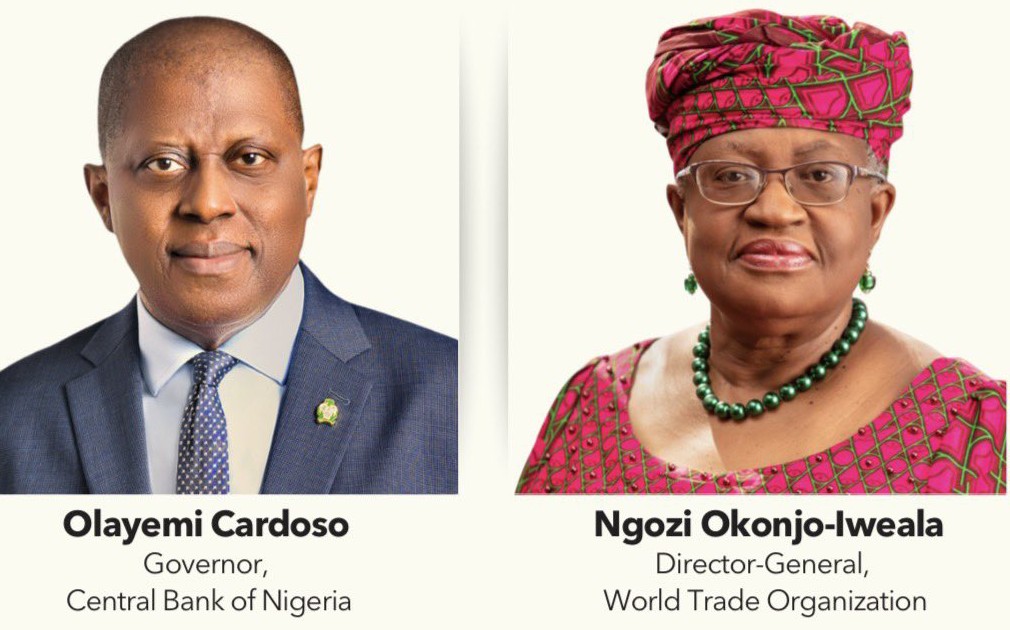
Okonjo-Iweala who spoke on Wednesday in Abuja at the ongoing seventh Africa Emerging Market Forum, urged African nations to take advantage of the global uncertainties to build the capacity of its youth population to deploy AI technologies to find solutions to their economic challenges.
The Forum, organised in collaboration with the Central Bank of Nigeria (CBN), under the theme “Building Africa’s Resilience in Changing Global Economic Order” brings together central bank governors, ministers, industry leaders and policymakers from across the continent to examine how Africa can navigate an increasingly fractured global economic landscape to grow her economy and sustain resilience.
In her keynote address at the event titled “Strengthening Global Resilience in an Era of Geoeconomic Uncertainty: The Role of Rules-Based Cooperation and Inclusive Growth”, the Director-General of the World Trade Organization, Dr Ngozi Okonjo-Iweala, described the geoeconomic uncertainty in the post-World War II global order as undergoing its most severe test in eight decades.
Recalling a recent speech by the Canadian Prime Minister, Mark Carney, in Davos, WTO DG said the moment was more of a “rupture than a transition,” pointing out that rather than see the end of globalisation, the world is witnessing its transformation “from cooperative to competitive interdependence” where states compete vigorously, while remaining unwilling to abandon the integrated system sustaining them.
She identified five structural forces driving today’s global uncertainties, including the balance of global economic output, which she said has flipped dramatically since 1995, with advanced economies accounting for about 60 percent of global GDP in purchasing power parity terms, against developing countries’ 40 percent.
Although those indices have now reversed, she observed that Africa’s share of global GDP has remained persistently low.
Also, she identifies the other structure underlining global uncertainties to rising inequality within countries, citing a G20-commissioned report led by Nobel laureate Joseph Stiglitz, which showed that more than two-thirds of the world’s population live in countries where the top one percent have grown richer relative to everyone else since 2000.
Again, she drew attention to the impact of technological disruption, particularly fears around AI-driven job losses as well as climate change, with the World Meteorological Organization estimating that African countries lose two to five percent of GDP annually to climate impacts, resulting in some diverting up to nine percent of national budgets to disaster response.
In addition, the WTO DG highlighted issues of demographic divergence, pointing out that ageing populations in wealthy nations against a young, expanding African workforce.
Okonjo-Iweala pushed back on the tendency to blame trade itself for these dislocations, arguing that automation, not import competition, accounts for most job losses in advanced economies, and that domestic tax and labour policy, not trade exposure, could better explain diverging inequality outcomes.
She also pointed to “over-dependencies” in the global system, warning that the weaponisation of these dependencies was fuelling resentment and political tension around the world.
Despite these issues, she maintained that global trade has proven remarkably resilient, with goods and services trade hitting a record $34.65 trillion in 2025, up 7 percent year-on-year, while goods trade volumes grew 4.6 percent and services trade 5.3 percent.
Besides, she said that about 72 percent of global goods trade still moves on WTO most-favoured-nation terms, with another 16 percent flowing under WTO-linked bilateral and regional arrangements.
In terms of global goods trade volumes, she disclosed that the current data is more than 12 percent above pre-pandemic 2019 levels, and services trade volumes 31 percent higher.
Turning to opportunity, Okonjo-Iweala urged African nations to move beyond an “extract and export” model for critical minerals to achieve meaningful growth.
She cited the example used in batteries and low-carbon technologies toward higher-value regional processing and supply chains, noting that Africa holds an estimated 30 percent of the world’s known mineral reserves.
Using Morocco as an example, Okonjo-Iweala, showed how the country’s use of phosphate resources to supply electric-vehicle component manufacturers was helping her economy.
Although she noted similar efforts in Zambia, the DRC, Mozambique, Angola and Nigeria to add value to mineral exports, she cautioned that these efforts need far greater regional coordination.
While commending the CBN governor’s currency and monetary stabilisation efforts, she urged Nigeria’s apex bank to sustain macroeconomic reform and prioritise job creation for its “young and hungry population.”
Three shifts, four foundations
On his part , the CBN governor, Olayemi Cardoso, who spoke on the measures Nigeria and the apex bank are taking to build resilience amid shifting global economic currents, highlighted three shifts that have laid the foundation for Africa’s resilience and growth.
Describing the Emerging Market Forum’s theme as timely, Cardoso noted that trade was becoming “more uneven,” capital “more selective and impatient,” and the rules-based international system “stretched and tested.”
He outlined three global shifts he said would define Africa’s opportunities going forward, including trade fragmentation, which has enabled geopolitical considerations to push countries toward nearshoring and “friend-shoring” with trusted partners.
He called this both a risk and an opening for Africa, the CBN governor noted that intra-African trade still accounts for only about 16 percent of the continent’s total trade.
Urging faster implementation of the African Continental Free Trade Area (AfCFTA), he said doing so alongside practical steps, like improved transport networks, harmonised customs standards, and faster, cheaper cross-border payments, would convert the agreement into functioning regional value chains.
Also, he spoke of the growing selectivity of global capital, pointing out that flows are now toward economies offering credibility, transparency and policy consistency rather than simply chasing yield.
Africa, he argued, must reduce its reliance on foreign capital by mobilising domestic pension and insurance funds, savings, and diaspora wealth, adding that credibility has become “not only a central bank concern” but “a national economic asset.”
He also noted the impact of the shift in terms of artificial intelligence, which he said was reshaping production, services and the skills required to compete globally.
Africa, he proffered, must move from being a consumer to a creator of AI technology to build solutions to African problems that can scale globally, adding that this was contingent on investment in electricity, connectivity, digital infrastructure and AI-skilled young people.
Citing Nigeria’s experience to buttress his point, Cardoso detailed the CBN’s return to its core mandate over the past three years by unifying the exchange rate, restoring price discovery, ending monetary financing of fiscal deficits, and rebuilding the foreign exchange market around transparency.
He said the results of these policies were now visible, in terms of inflation moderating despite energy-price shocks, strengthened external buffers, and a safer, better-capitalised financial system, describing credibility as something “built intentionally, one right decision after another.”
He outlined four foundations he said Africa must build to convert its potential into tangible growth, namely ensuring macroeconomic stability; building continental market scale through the AfCFTA; developing patient capital directed at productive investment rather than pure extraction, and, most importantly, investment in people, by preparing young Africans for an AI-enabled economy, while unlocking the full economic participation of women.
“Africa cannot fly with one wing,” he said, adding that the continent’s ambition should be an environment where young entrepreneurs can build and scale without needing to leave their country.
Although Cardoso acknowledged that anxiety over the shifting global order was real, he argued that disruption also creates openings for emerging markets to move “from being rule takers to becoming rule setters”, provided African nations pursue strategic collaboration, build credible institutions, and act together.
The two speeches set the stage for a fireside conversation between Okonjo-Iweala and Cardoso, with forum organisers describing the exchange as central to the week’s discussions on how Africa can convert global economic disruption into a platform for sustained growth, deeper regional integration and long-term resilience.
The event continues today.

