
By Bassey Udo

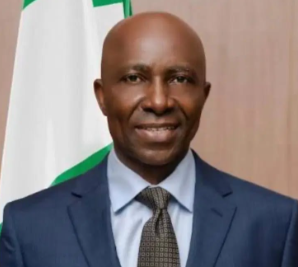
Media practitioners should partner with the office of the tax Ombud to create public awareness about the mandate of the agency to protect the rights of Nigerian taxpayers, the Tax Ombud, Dr. John Nwabueze, said.
Dr. Nwabueze, who is the Chief Executive of the Office of Tax Ombud Nigeria, spoke on Tuesday in Abuja during a breakfast meeting with financial journalists.
He described the decision by the Federal Government to establish the Office of the Tax Ombud under the country’s new tax administration framework as a significant milestone in strengthening transparency, accountability, fairness, and taxpayers’ confidence in the country’s tax system.
Commending President Bola Tinubu for the foresight to establish the office, Nwabueze applauded the Minister of Finance and Coordinating Minister of the Economy, Mr. Taiwo Oyedele, for his leadership in driving the ongoing tax reform process in the country.
“The Office provides an independent mechanism for addressing taxpayer complaints, resolving disputes fairly, protecting taxpayer rights, and improving the trust between tax authorities and citizens,” Dr. Nwabueze said.
Identifying Nigeria as the eighth country to establish such an office in the world, he explained that the office serves as a trusted bridge between taxpayers and revenue authorities, offering accessible, timely, and cost-effective mechanisms for addressing and resolving disputes.
Also, he said the mandate of the office encompasses mediation, conciliation, stakeholder engagement, and alternative dispute resolution — tools designed to reduce prolonged litigation and enhance institutional efficiency.
Dr. Nwabueze stressed that globally, modern tax systems are built not only on efficient revenue mobilisation alone, but also on fairness, accessibility, and public trust.
He noted that when citizens are confident that the tax system treats them fairly, compliance would increase — and with it, government revenue.
“When the public is confident that the tax system is fair to them, compliance increases. And an increase in compliance means revenue for the economy goes up. So essentially, that is the venture of this office,” he said.
On recent operational developments, the Tax Ombud disclosed that the office has unveiled its website and launched a call centre and case management portal, through which individuals, businesses, and other stakeholders can submit complaints online or by phone, access taxpayer information, and monitor the progress of their cases in real time.
The office, he added, was making provisions for Nigerians in rural areas, particularly those without sufficient airtime to be able to send an SMS and receive a callback.
On the scope of its authority, Dr. Nwabueze clarified that the mandate of the Office of the Tax Ombud was different from that of the tax tribunal, as it operating as an independent body whose rulings are reached through mediation and conciliation rather than litigation.
While the office engages directly with tax authorities to resolve complaints, either party retains the right to escalate unresolved matters to the Tax Appeal Tribunal.
He cited South Africa’s experience as an encouraging precedent, noting that over 80 to 90 per cent of rulings by comparable offices in other jurisdictions are accepted without further escalation.
Dr. Nwabueze also highlighted that the office’s mandate extends to addressing the persistent issue of multiple taxation, which he acknowledged burdens many Nigerians and discourages voluntary compliance.
He said his office was working with state internal revenue services across the country’s six geopolitical zones to tackle this challenge and provide relief to taxpayers who have faced unfair treatment.
Despite the office’s broad mandate, Dr. Nwabueze acknowledged a major challenge of an overwhelming lack of public awareness of its mandate and existence.
He estimated that as many as 99.9 per cent of Nigerians are yet unaware that the Office of the Tax Ombud exists, making media engagement critical to the agency’s mission.
The office, he said, plans to expand its footprint to all 36 states of the Federation and eventually to all the 774 local government areas across the country within the next two years.
To help realise the mandate of the office, Nwabueze appealed to financial journalists and correspondents to serve as partners in a national public enlightenment effort to create awareness among Nigerian taxpayers in the interest of national development.
“I urge you to use your professional capacity as financial journalists not only to educate and inform the taxpaying public about the mandate of the tax Ombud, but also the process of filing complaints or grievances on tax matters,” he said.
He assured the journalists that as partners in progress, his office and media team remained open and available to support journalists in publicizing its activities and programmes to the people.
Dr. Nwabueze, who brings nearly 28 years of tax advocacy experience from the United States, said he considers his appointment as the first Chief Executive of the office as a profound honour and responsibility, and pledged to set the right institutional standards from the outset.
“The office is new and evolving. I ask you all to come along with me on this journey,” he said. “If we do this right, the public — the citizens — will have the measure of relief that they all deserve.”
In his brief remarks, the Chairman of the Finance Correspondents Association of Nigeria (FICAN), Abuja, Mr Bassey Udo, applauded the tax Ombud for starting on a positive note, by deciding to meet, interact and solicit the partnership of the media.
He assured the Tax Ombud that members of the Association were committed to working with his office to create the awareness among Nigerians to help achieve the objectives of the agency’s mandate.

