
The Revenue Mobilization Allocation and Fiscal Commission (RMAFC) has reaffirmed its commitment to promoting transparency, fairness, accountability, and stakeholder collaboration in Nigeria’s revenue administration system.

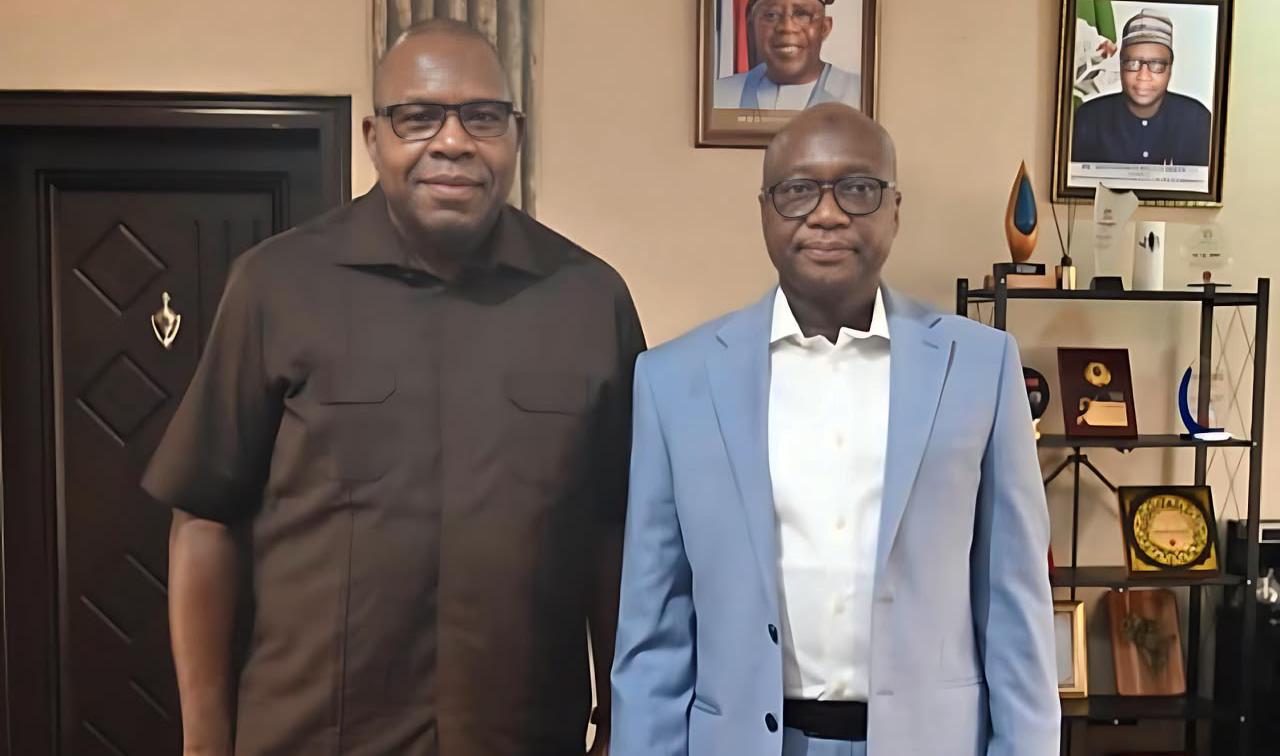
The RMAFC Chairman Dr. Mohammed Bello Shehu, stated this while receiving a delegation from the Joint Revenue Board led by its Executive Secretary, Mr. Olusegun Adesokan, during a courtesy visit on Tuesday in Abuja.
Dr Shehu emphasized the Commission’s dedication to ensuring that ongoing revenue reforms delivered positive outcomes for both government institutions and taxpayers across the federation.
He noted that the success of the reforms depended largely on cooperation among all stakeholders involved in revenue generation and administration.
“The Revenue Mobilization, Allocation and Fiscal Commission remains committed to promoting transparency, fairness, and accountability in Nigeria’s revenue administration.
“As key stakeholders in the nation’s fiscal architecture, we must work together to ensure that ongoing revenue reforms protect the interests of taxpayers while guaranteeing equitable revenue allocation across all levels of government,” the Chairman said.
Effective stakeholder engagement, policy harmonization, and institutional collaboration, he pointed out, were essential for achieving the objectives of the ongoing reforms.
He gave the assurance that the Commission would continue to support government initiatives that strengthen revenue generation while ensuring its equitable and fair allocation in accordance with extant rules.
On concerns raised regarding aspects of the new tax regime, particularly issues relating to refunds, revenue allocation, and electronic transfer taxation, Dr. Shehu acknowledged the need for continued dialogue and technical engagement between the various stakeholders.
He said that such discussions were necessary to guarantee fairness, efficiency, and public confidence in the nation’s tax administration framework.
“The Commission is committed to supporting measures that enhance compliance, improve transparency, and foster public confidence in the nation’s tax administration framework.
“With sustained cooperation among federal and subnational governments, revenue institutions, and with proper implementation of the ongoing reforms, we expect to witness significant improvements in revenue collection and fiscal efficiency over the next five to six years,” he added.
Earlier, the Executive Director of the Joint Revenue Board, Mr. Olusegun Adesokan, disclosed that the visit was aimed at strengthening collaboration between the JRB and RMAFC towards the successful implementation of Nigeria’s ongoing revenue reforms.
Adesokan noted that effective coordination among relevant institutions remained critical to achieving the objectives of the new tax framework.
He said that the revenue reform framework was designed to promote fairness, equity, and transparency in tax administration while ensuring clearer revenue allocation mechanisms between the federal and subnational governments.
The Director explained that the reforms seek to create a system that benefits taxpayers, government institutions, and the nation’s overall fiscal stability.
Acknowledging concerns raised by stakeholders regarding electronic money transfer levies, stamp duties, revenue allocation, refunds, and the treatment of advance tax payments, the JRB Executive Director gave the assurance that the Board would continue to engage relevant authorities and stakeholders to address these concerns through consultations and technical discussions.
The Joint Revenue Board, he said, remained committed to working closely with RMAFC and other stakeholders to ensure that revenues were properly attributed to the appropriate states and that taxpayers were treated fairly under the new tax framework.
He commended the Commission for its commitment to stakeholder harmonization and expressed confidence that sustained collaboration, information sharing, and stakeholder education would significantly improve revenue generation and compliance across the federation.
Mr. Adesokan pledged the Board’s continued support for all initiatives aimed at strengthening Nigeria’s revenue administration system.
He assured the Commission that the JRB would continue to provide technical inputs, reports, and necessary support to ensure the successful implementation of the ongoing reforms.
During the meeting, both organizations reaffirmed their commitment to deepening collaboration, promoting taxpayer protection, enhancing revenue administration, and ensuring the successful implementation of reforms designed to strengthen Nigeria’s fiscal framework and accelerate national development.
The meeting was attended by the Chairman and vice Chairman of the Nigerian Revenue Service Monitoring Committee of the RMAFC, Daniel Kolade Abimbola and Abubakar Wamakko respectively as well as the Secretary to the Commission, Joseph Nwaeze Okechukwu.
Other officials of RMAFC in attendance were the Director, Federation Account Allocation Committee Department, Ahmed Rufai Gidado, Director, Inland Revenue Monitoring Department, Mohammed Hamis Ishaq, Ag.Director, Chairman’s office Gidado Muhammed Yahaya , Deputy Director Inland Revenue Monitoring Department, Ali Sagir and the Special Assistant to the Chairman on Technical matters, Professor Aliyu Idris.
The Executive Secretary of the JRB was accompanied on the visit by Mr. Matthew Emune and Mr. Collins Musu.

