
By Bassey Udo

Less than 24 hours to the commencement of the 2026 Extractive Industries Transparency Initiative (EITI) Validation process, the Nigerian EITI Secretariat has reaffirmed its readiness for the exercise.
The reaffirmation is coming on the heels of media reports that Nigeria may yet be walking a tight rope in its race against possible suspension from the global transparency body for alleged non-compliance with some stipulated standards and principles ahead of the commencement of the validation exercise tomorrow, July 1.
Validation is a process where the 55 EITI implementing countries are assessed every three to four years to ascertain their level of compliance with stipulated EITI standards and principles in terms of transparency and accountability by both the operating companies and the government.
Under the EITI process, a key action expected from EITI implementing countries, to demonstrate their level of preparedness to participate in the validation exercise, is the mandatory publication of their annual industry audit report ahead of the deadline set for the commencement of the validation exercise.
However, hours before the July1 deadline, NEITI is yet to publish its 2024 Industry Audit Report, a key requirement to assess the country’s level of compliance with the EITI standards.
NEITI cited “unforeseen national budgetary constraints and fiscal deficits in the Federal Government’s 2025–2026 Appropriation”, which resulted in delays in the disbursement of funds to its Secretariat for the procurement of an Independent Administrator to finalize and produce the Report as previously planned.
Consequently, the NEITI Board had appealed to the EITI Board for an extension of the deadline for the commencement of the validation exercise from July 1, 2026 to July 1, 2027 to give it enough time to resolve all outstanding issues in readiness for the exercise.
But the International Secretariat of the EITI Board rejected the request and insisted on keeping its July 1, 2026 schedule for the validation exercise.
In an attempt to avert a possible EITI sanctions, civil society groups involved in the EITI process in Nigeria on Wednesday converged on Abuja for a stakeholder consultative meeting to brief its members on their level of preparedness towards the commencement of the validation exercise.
The meeting facilitated by the CSO Representative on the National Stakeholder Working Group (NSWG), also known as the NEITI Board, Dr Erisa Danladi, was supported by the International Institute for Democracy and Electoral Assistance (IDEA) in conjunction with Rule of Law and Anti-Corruption (RoLAC), a European Union (EU) funded programme.
Danladi said the meeting was organized to brief the CSOs and provide them with updates on the progress towards the validation process; clarify various stakeholders’ roles as well as the level of preparedness of Nigeria for the all important exercise considered critical to assess and revalidate member countries’ level of compliance with EITI standards, in terms of transparency in the management of its oil, gas and mining sectors.
The National Coordinator of the Resource Justice Network explained that the meeting was also convened to validate sector inputs into the EITI stakeholders’ template to be submitted to the EITI Validation team.
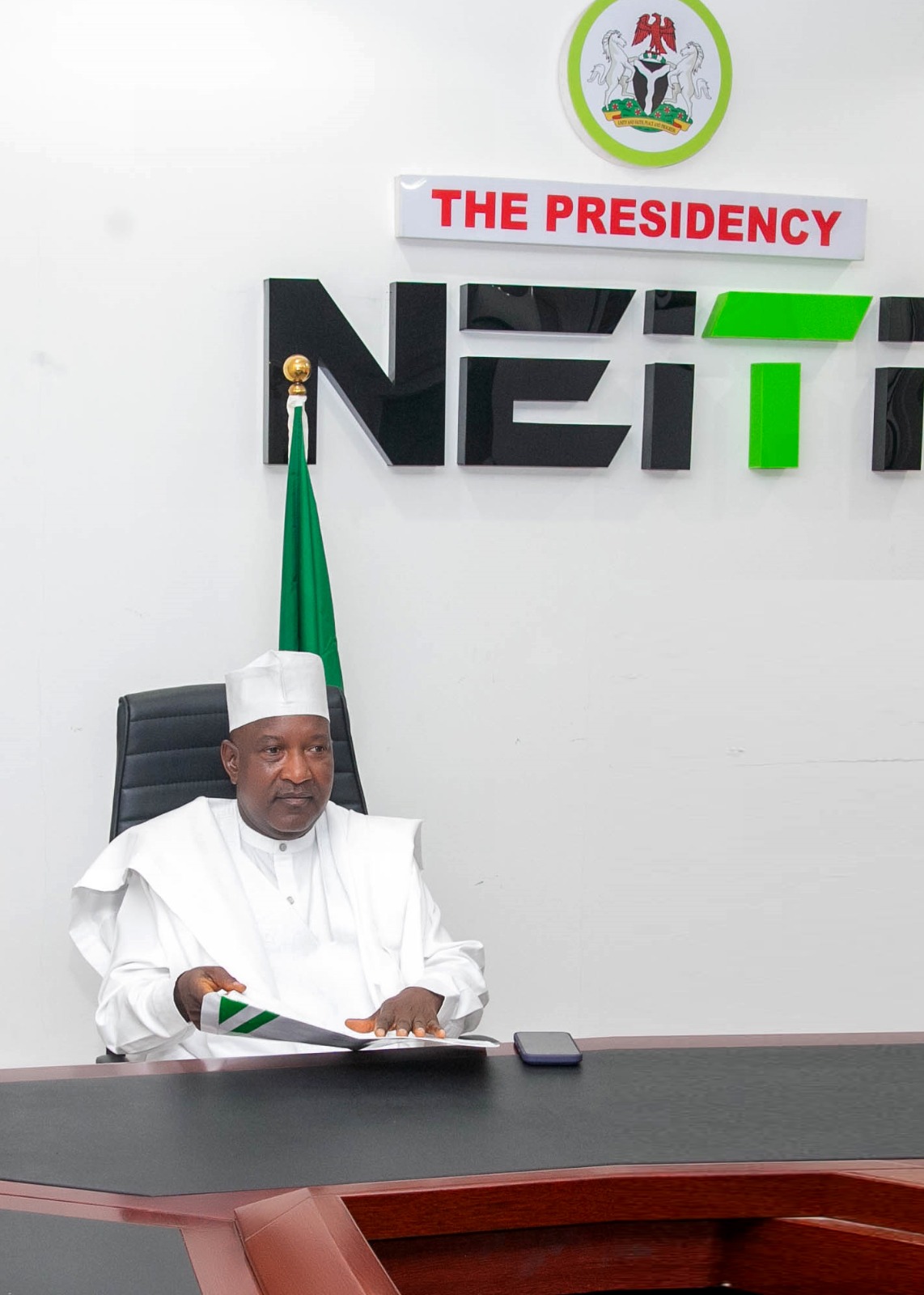
Addressing participants in the meeting, NEITI’s Executive Secretary, Musa Sarkin-Adar, assured civil society of the country’s full preparedness for the Validation exercise.
Sarkin-Adar explained that the National Stakeholders Working Group (NSWG), also known as the NEITI Board, has systematically addressed corrective actions highlighted in the 2023 validation report, including issues bordering on stakeholder engagement, contract disclosure, resource-backed loans, subnational transfers, and state-owned enterprise transparency.
“Nigeria has taken deliberate steps to close gaps identified in the last validation exercise. We are stronger, more coordinated, and ready to demonstrate our progress to the global EITI community,” Sarkin-Adar Adar said.
He said NEITI has also facilitated discussions on the new validation model, templates, and corrective actions with the three major constituencies in the EITI process, namely civil society, government, and companies.
Validation, he noted, is not just about compliance with EITI standards and principles, but also an exercise to proof of Nigeria’s unwavering commitment to transparency, accountability, and good governance in managing our extractive resources.
It is an “opportunity to showcase Nigeria’s sustained commitment to reforms and continuous improvement in extractive sector governance.”
NEITI, the Executive Secretary disclosed, is working closely with various government agencies, extractive companies, civil society organizations, and development partners to ensure all documentations and disclosures required under the 2023 EITI Standards are complete and accessible to the relevant authorities.
“Together with our partners, we will ensure that every disclosure is ready, every corrective action addressed, and every constituency fully engaged. Nigeria is prepared to lead by example as usual,” he said.
Urging stakeholders in the EITI process, especially civil society and the media to play their roles effectively by tracking and monitoring audit recommendations and institutional disclosures, as well as engage with validation templates and provide inputs.
“Everyone of us must take ownership of Nigeria’s validation process by documenting and projecting the strengths and progress the country has made in implementing the EITI standards in the extractive industries.
The Chairman of the NEITI Board, who is also the Secretary to the Government of the Federation, George Akume, enjoined all Stakeholders to unite to ensure the country emerged strong at the end of the validation exercise.
Akume, who was represented by South South representative on the NEITI Board, Dr Stephen Akpan, described the 2026 validation as a common goal uniting all stakeholders, stressing the need for closer collaboration with NEITI to ensure a successful outcome.
The Director of Communications and Stakeholders Management in NEITI, Obiageli Onuorah, reaffirmed Nigeria’s strong standing in the run up to the zoo commencement of the validation exercise, citing recent steps to address corrective actions.
She highlighted the signing of a Memorandum of Understanding with the National Human Rights Commission to protect civic space in the EITI process as one of the notable actions, describing it as “an innovative and trail-blazing move celebrated by the EITI.”
The Executive Director, Center for Transparency Advocacy (CTA), Ms. Faith Nwadishi, who made a presentation to explain the process urged civil society groups to view the templates not just as validation tools, but as instruments for implementation and accountability.
“These documents must be used to hold covered entities to account,” she said.
Prominent civil society group leaders and some non-state actors who participated in the meeting, including the Executive Director, Environmental Defenders Network (EDEN), Barrister Chima Williams; Emeka Ononamadu, and Mustapha Mohammed, all voiced strong support for NEITI and Nigeria’s validation process.
Validation, they emphasized, is an independent assessment of progress by EITI implementing countries. “Nigeria welcomes this process as a vital mechanism to strengthen public trust, enhance revenue accountability, and ensure our natural resources contribute meaningfully to sustainable development,” they said.
Beyond assessing Nigeria’s compliance with the EITI Standard, the civil society group leaders said the validation process should provide an opportunity for civil society to take stock of their collective achievements, identify existing gaps, and explore practical ways of strengthening transparency, accountability and good governance within Nigeria’s extractive sector.