

By Bassey Udo

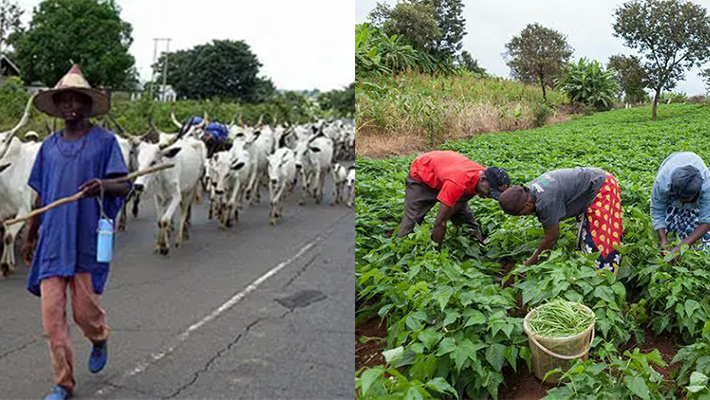
A group, Youths Against Disaster Initiative (YADI) says the implementation of a comprehensive and structured ranching reform could provide lasting solutions to recurring tension, strife and conflict between farmers and pastoralist herders in Nigeria.
Addressing journalists in Abuja on Tuesday, the leaders of the group, Farouk Bala, said the reforms should be considered as an urgent national imperative to restore peace and ensure national economic transformation.
For decades, Bala observed that the open grazing system practised by pastoralists in the country has always been a source of recurring tension between farmers and herders, with a study by the Centre for Crisis Communication (CCC) revealing that between 2018 and 2023 an estimated 3,000 people lost their lives in clashes across the North-Central states, while over 300,000 people were displaced from their communities.
Also, Bala said the 2024 Nigeria Watch Report documented that violence involving farmers and herders claimed about 567 lives across 20 states and the Federal Capital Territory within a single year.
These figures, he said, were not mere statistics, but a reflection of the reality of lives lost, livelihoods destroyed, and communities fractured.
He said it was within this painful context that the group proposed a structured ranching as a sustainable alternative to open grazing, to reduce friction over land and water resources, while promoting peaceful coexistence and economic modernization.
The group said there was an urgent need for a comprehensive and well-structured ranching system to be established as a strategic pathway to economic diversification, agricultural modernization, food security, and enhanced national security.
Commending the commitment of President Bola Ahmed Tinubu’s administration to implement ranching reform, with Kwara State selected as the pilot state, YADI said it acknowledged the resistance emerging in some quarters.
Bala said engagements by the group across communities revealed that the majority of pastoralists, farmers, and community leaders were not fundamentally opposed to ranching reforms, but many have reacted negatively as a result of inadequately information about its economic prospects, security benefits, and long-term sustainability.
“The resistance observed appears largely driven by misinformation—fears among farmers about possible displacement, and concerns among herders about abandoning the long-standing tradition of open grazing. This reflects not outright rejection, but a gap in consultation, engagement, and public sensitization,” the group said.
“Reforming Nigeria’s livestock sector is not optional, it is essential for economic revitalization,” it added.
Quoting Federal Government data, which show that Nigeria’s livestock sector contributes over $32 billion to the nation’s gross domestic product (GDP), the group said that under the National Livestock Growth Acceleration Strategy (2025–2030), the sector was projected to grow its contribution to between $74 billion and $94 billion within a decade if properly structured.
Globally, cited examples of countries that have embraced modern ranching systems and are enjoying substantial economic benefits.
For instance, it said Brazil, which currently the world’s largest beef exporter, recorded approximately $9.3 billion in beef exports in 2024, while the United States exported $7.2 billion worth of beef, and Australia’s exports totaled about $8 billion in the same year.
Besides, the group said Uruguay, which is a much smaller country, earned $2.85 billion through high-quality, traceable beef production.
In contrast, the group noted that Nigeria, despite maintaining a cattle population of about 20 million and ranking among the top 15 globally, generated only $172,000 from cow exports in 2024; $1.15 million from live animal exports in 2021, and less than $200,000 from meat and edible offal exports.
These figures, the group pointed out, underscore the vast economic potential being forfeited as a result of poorly structured and inefficient livestock management systems.
YADI posited that structured ranching offers Nigeria a strategic opportunity to transform its underutilized livestock potential into tangible economic gains capable of driving broader national development.
Apart from significantly enhancing revenue generation and strengthening foreign exchange stability, YADI said
modern ranching would help in meeting international standards in traceability, hygiene, and quality control, while Nigeria can access markets within ECOWAS and expand exports to the Middle East and Europe.
In addition, YADI argued that the country could reduce its heavy reliance on imported dairy and meat products, conserve foreign reserves, and improve its balance of trade as a result of modern ranching.
“Structured ranching has immense potential for job creation across the livestock value chain. From ranch management and veterinary services to feed production, meat processing, logistics, leather manufacturing, and cold-chain operations, the sector can stimulate diverse employment opportunities. This will provide sustainable livelihoods for unemployed youth and rural dwellers, revitalize rural economies, and reduce migration pressures on urban centers.
“Ranching substantially increases productivity and promotes value addition. Through controlled breeding, professional veterinary supervision, feedlot fattening, and improved genetics, meat and milk yields can be significantly enhanced.
“Beyond primary production, ranching supports agro-processing clusters, rural industrialization, and stronger food security systems. It shifts livestock production from subsistence practice to a modern, commercially viable enterprise capable of contributing meaningfully to GDP growth.
“Structured ranching also deepens financial inclusion and attracts private investment. Properly registered ranches with accurate record-keeping are more likely to access bank credit, insurance products, agritech innovations, and public-private partnerships. Formalization expands the national tax base and reduces economic leakages associated with informal livestock activities,” the said.
Beyond its economic implications, YADI said ranching constitutes a critical national security intervention against open grazing, which, historically, has been a major trigger of farmer-herder conflicts, leading to deaths, displacement, and agricultural disruption.
With structured ranching, order, accountability, and spatial clarity would be introduced into livestock management, with designated ranching zones established to prevent encroachment on farmlands and reduce violent confrontations.
Where disputes arise, YADI they can be resolved through legal frameworks and mediation mechanisms, rather than escalating into violence.
Geographically defined ranching communities, the group said, would enhance surveillance and livestock traceability, improving identification, monitoring, and intelligence gathering, thus strengthening early warning systems and supports coordinated security responses.
Settled pastoral communities with clear leadership structures, the said, are better positioned to resist criminal infiltration and cooperate with security agencies.
Unlike unregulated trans-human routes that often provide anonymity for criminal elements, YADI said structured ranching limits uncontrolled movement, improves traceability, and reduces operational spaces for non-state armed actors, while reinforcing territorial control, promoting accountability, and contributing to national stability and sustainable peace.
“Ranching reform is neither a cultural eradication policy nor a land-grab agenda. It is a development-oriented reform designed to modernize livestock production, while preserving dignity, livelihoods, and social cohesion.
“Once pastoral communities are properly informed about access to finance, veterinary services, reliable markets, and secure land tenure, acceptance increases significantly. Likewise, farmers must understand that ranching is not an attempt to dispossess them. The core challenge remains misinformation—not inherent resistance,” the group said.
For ranching reform to succeed, YADI advocates a holistic, inclusive, and incentive-driven framework, adding that inclusive stakeholder engagement must form the foundation of the reform process, involving pastoral associations, farmers’ groups, traditional rulers, state governments, youth organizations, and civil society actors.
For nationwide public sensitization, YADI said the National Orientation Agency, media institutions, civil society, and traditional and religious leaders must coordinate sustained awareness campaigns that clearly communicate the economic and security benefits of ranching.
Clarity in land tenure and deliberate infrastructure development are critical. Transparent land acquisition, secure land titles, water provision, grazing reserve conversion, access roads, veterinary clinics, and cold-chain logistics must accompany implementation.
Again, YADI said incentive-driven voluntary adoption—through access to credit, livestock insurance, subsidized feed, modern husbandry training, and guaranteed market linkages—should replace coercive enforcement, while strong governance, monitoring systems, livestock identification frameworks, environmental safeguards, and conflict mediation structures must be introduced to ensure accountability and sustainability.
Expressing conviction that ranching reform represents a strategic lever for economic empowerment, food security, environmental sustainability, and national peace, YADI said Nigeria’s 20 million cattle can become a cornerstone of industrialization, export growth, youth employment, and strengthened internal security if properly harnessed.
The group called on Federal and State Governments, pastoral and farmers’ associations, development partners, and the broader public to unite behind this transformative agenda, saying with adequate information, inclusive dialogue, and transparent implementation, ranching reform can become a unifying national project, rather than a divisive debate.