
By Bassey Udo
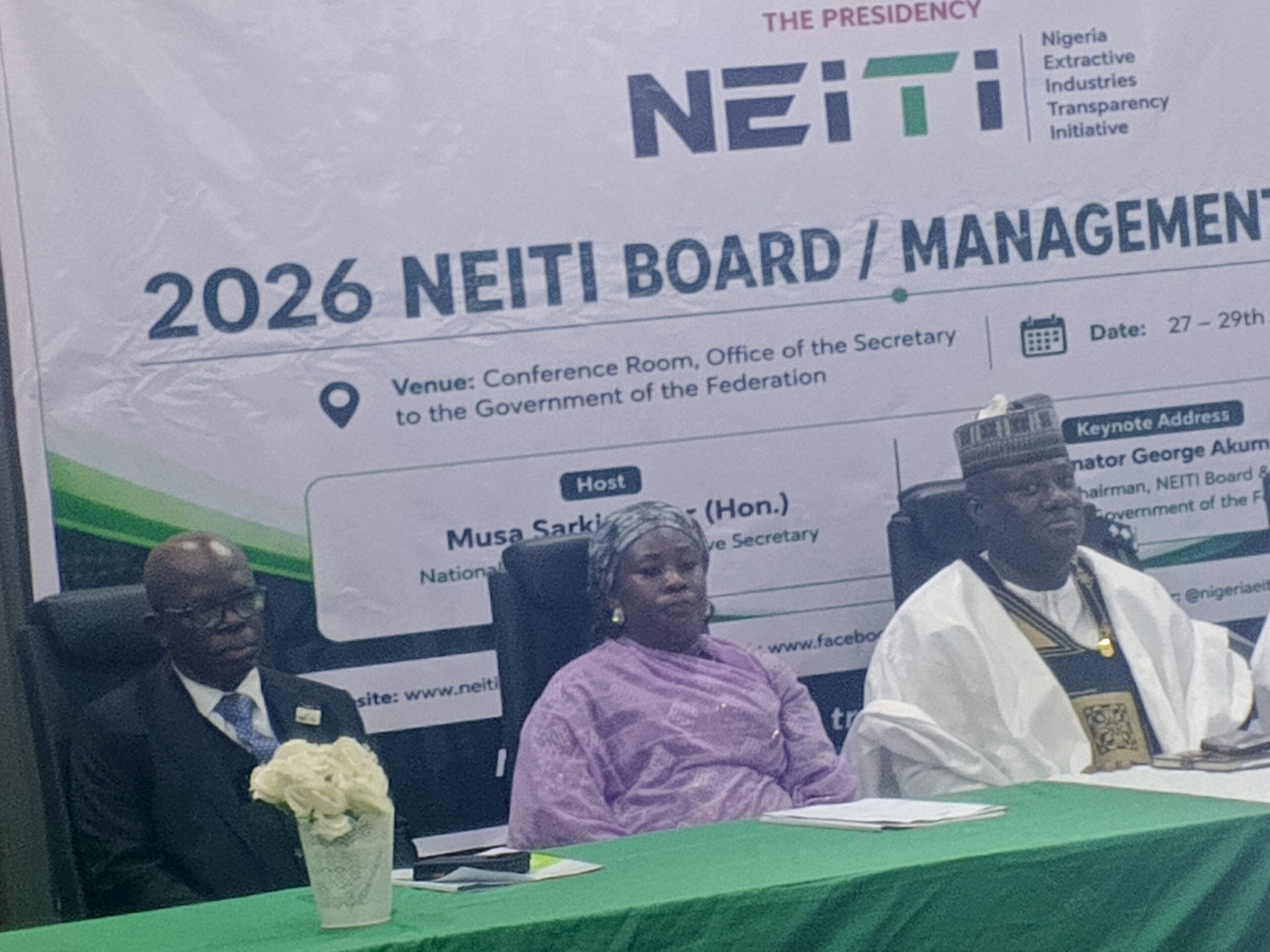
The Board of the Nigerian Extractive Industries Transparency Initiative (NEITI), also known as the National Stakeholders Working Group (NSWG) of the multi-stakeholder body, is currently on a retreat in Abuja to review the progress achieved so far by Nigeria in the ongoing Extractive Industries Transparency Initiative (EITI) validation exercise.
The two-day retreat organized on the theme: “Strengthening EITI Implementation: From Extractive Sector Reporting to Impact.”
for members of the Board and senior management staff of the NEITI Secretariat was declared open on Monday by the Secretary to the Government of the Federation, George Akume, who is also the Chairman of the NEITI Board
The 2026 validation exercise, which commenced on July 1, is EITI’s quality assurance mechanism to assess member-country’s performance, in terms of progressive and impactful compliance and adherence to its stipulated standards and principles to strengthen good governance in the management of oil, gas and mining sectors resources.
Retreat amid fears
The Board retreat is holding amid fears that Nigeria may not have done enough to earn it the high assessment outcomes it recorded in the 2023 edition of the validation exercise, which is expected to provide the base benchmark for assessing Nigeria’s progress.
At the end of the 2023 Validation exercise, Nigeria achieved a moderate score of 72 points over 100 in its implementation of the 2019 EITI Standard, with overall score reflecting an average of 52.5 points for Stakeholder engagement; 71.5 points for Transparency, and 92 points for Outcomes and impact.
However, in its final report, the EITI Board identified some key shortcomings it said the country required corrective and remedial actions before the January 2026 deadline to stand it on solid ground ahead of the commencement of the validation exercise on July 1, 2026.
The shortcomings identified by the EITI covered government, industry and civil society engagements, multi-stakeholder group governance, contract and license allocations, license register, contracts, beneficial ownership, and state participation.
Others included barter agreements and infrastructure provisions, level of disaggregation, distribution of extractive industry revenues, subnational transfers, social and environmental expenditures and state-owned enterprises’ quasi-fiscal expenditures.
Requirements for EITI Validation
Under the EITI process, a key action to demonstrate preparedness of a country to participate in its revalidation exercise is the mandatory publication of its annual industry report several months ahead of the deadline set for the commencement of the validation exercise.
EITI Standards stipulate that a country, which neglects to meet the reporting deadline for any of the required actions prior to the commencement of the validation exercise, particularly the publication of its annual audit report, might risk serious sanctions.
Nigeria is already lagging behind in a key benchmark, as inadequate funding challenges frustrated the publication of the 2024 NEITI Audit Report, prior to the commencement of the validation exercise on July 1, 2026.
Although EITI has given Nigeria a soft landing window by accepting to base its current assessment on the 2023 validation template, it still leaves the country holding the short end of the stick, in terms of its limited ability to earn maximum scores that would surpass its high performance in the last validation.
Retreat at Nigeria’s defining moment
In his remarks at the opening of the Board Meeting in Abuja on Monday, NEITI Executive Secretary, Musa Sarkin-Adar, said the retreat, which is holding at a defining moment in Nigeria’s implementation of the EITI, presents a an opportunity to reflect on how far Nigeria has come, assess where country is today and determine what must be done to ensure that transparency delivers measurable outcomes.
Sarkin-Adar said NEITI, for over two decades, established itself as one of the leading implementing countries of the EITI through the consistent publication of independent industry reports covering the extractive sector, strengthening transparency, enhancing public access to information and contributing significantly to reforms within Nigeria’s extractive industries.
While these achievements deserve recognition, he said they provide a compelling reason for members of Stakeholders’ working group to ask a more fundamental question on whether transparency has translated into the level of impact envisioned when NEITI was established.
“Increasingly, the global EITI process is shifting attention from reporting to impact. The emphasis is no longer limited to the production of quality reports, but on how disclosures influence public policy, strengthen institutions, improve revenue governance, promote accountability and deliver value to citizens,” he noted.
He said the shift now requires NEITI to continuously evolve, by ensuring that its reports remained credible and become more influential in shaping reforms, informing policy decisions and supporting institutional accountability across the extractive sector.
Recent engagements with government institutions, extractive companies, civil society organisations and the media, he disclosed, have revealed a high level of commitment to the ongoing validation process, which has highlighted areas where stronger coordination, improved documentation and more effective implementation of recommendations remain necessary.
The Executive Secretary acknowledged the responsibility of his leadership to go beyond meeting international reporting requirements to influencing national policy, strengthening institutional performance and improving public confidence in the governance of Nigeria’s natural resources.
Describing the retreat as an opportunity for honest reflection, Sarkin-Adar said the NEITI Board should critically evaluate the impact of NEITI’s work, while examining the implementation of recommendations arising from NEITI industry reports, and identify practical strategies for improving institutional effectiveness beyond the publication of reports.
Ahead of the impending visit to Nigeria by the EITI International Validation Assessors in August, he urged members of the NEITI Board to use the retreat to properly align the country’s priorities, by engaging openly, thinking strategically and using the outcomes to position NEITI for its next phase of growth and impact.
Let’s pause and reflect
In his speech, the SGF commended the NEITI Secretariat for convening the retreat, saying the ongoing 2026 EITI Validation exercise provides a necessary opportunity for Stakeholders to pause, reflect on the progress Nigeria has made, assess its preparedness, and renew the country’s commitment to ensuring that EITI implementation translated into meaningful reforms and tangible benefits for the ordinary Nigerian.
He said measuring Nigeria’s success in the implementation of the EITI standards should not be equated with the number of reports published, or the volume of data disclosed, rather it should be the extent to which transparency strengthens our institutions, builds investor confidence, restores public trust in how we manage our resources, and supports sustainable national development for the benefit of the citizens.

He said EITI Standard, which places greater emphasis on systematic disclosures, beneficial ownership and contract transparency, state-owned enterprises, anti-corruption measures, environmental reporting, energy transition and meaningful stakeholder participation, align closely with the Federal Government’s reform agenda.
The 2026 EITI Validation exercise, he pointed out, is an opportunity to demonstrate the progress Nigeria has made in strengthening extractive sector governance, addressing previous corrective actions and institutionalising reforms that promote transparency and accountability.

