
On behalf of the Economic Justice Coalition (EJC), we sincerely appreciate this opportunity to engage with you on the state of Nigeria’s economy and the shared responsibility of building an economy that is growth driven, fiscally responsible, competitive, socially just, inclusive and accountable.
PART 1: Audit and the Economy
1. The Federal Audit Service Bill and the Need for Presidential Assent
The Federal Audit Service Bill (as passed by the House of Representatives in 2023 and the Senate in 2025) represents a landmark reform aimed at modernizing Nigeria’s public audit system, replacing the obsolete Audit Ordinance of 1956.
While the Bill speaks to the repeal of the Federal Audit Ordinance of 1956, it is imperative to note that the Audit Ordinance (Act) of 1956 was not reproduced in the Laws of the Federation of Nigeria 1990 and by S.5 (1) of the Revised Edition (Laws of the Federation of Nigeria) Decree 1990, the Act ceased to be part of Nigerian laws. The Act is not reproduced in the Laws of the Federation of Nigeria 2004.
However, no new audit law has been enacted at the federal level since then. As such, there is a lacuna in that area of the law. Assuming without conceding that the Audit Act of 1956 is still extant law, it is outdated, obsolete and needs to be replaced.
The Bill introduces institutional independence, expands audit scope, strengthens enforcement powers, and aligns Nigeria’s audit framework with international standards. Its assent is critical to improving fiscal discipline, reducing corruption, and enhancing public sector performance.
Three specific dynamics make assent urgent now.
(a) The International Monetary Fund (IMF) has been explicit. In the June 2026 Article IV Consultation, the Fund’s Executive Directors called directly for enhancing governance frameworks and anti-corruption frameworks strong expenditure management and transparent implementation and reporting as essential ingredients for Nigeria’s development agenda. The Federal Audit Service Bill was specifically referenced in that report.
(b) The Financial Action Task Force (FATF) exit must not be squandered. Nigeria was removed from the FATF Grey List in October 2025, a hard-won outcome. The FATF framework explicitly monitors audit oversight of public funds as part of its anti-money laundering and financial integrity assessments.
Continuing without audit reform risks signaling that enforcement reforms are selective and incomplete to the same international community that just granted Nigeria a clean bill of health.
(c) The reform window is finite. With elections approaching in 2027, the administrative bandwidth to implement structural reform will contract. The Federal Audit Board should be constituted, the Director-General appointed, and the transition from the 1956 framework managed, all of which require lead time. Assent in 2026 gives implementation a fighting chance.
2. The Economy
We acknowledge the difficult policy choices that have confronted your administration over the past three years.
The removal of fuel subsidies, exchange rate liberalisation, tax reforms, efforts to strengthen domestic revenue mobilisation, and initiatives to improve fiscal discipline were undertaken against a backdrop of dwindling fiscal space, rising debt obligations, macroeconomic imbalances and declining investor confidence.
These reforms required political courage and were intended to restore macroeconomic stability and place Nigeria on a more sustainable development trajectory.
Indeed, some encouraging macroeconomic indicators have begun to emerge. Inflation has moderated from previous peaks, foreign exchange market distortions have reduced, external reserves have improved, investor confidence is gradually returning, and government revenues have strengthened.
The International Monetary Fund (IMF), in its 2026 Article IV Consultation, recognised that Nigeria’s reforms have improved macroeconomic stability and enhanced policy credibility while urging government to sustain reforms and deepen social investments to ensure that growth becomes inclusive.
Yet, while macroeconomic indicators are improving, the everyday reality for millions of Nigerians remains profoundly difficult. For the average Nigerian family, economic reforms are not judged by exchange rate movements, sovereign credit ratings or fiscal balances.
They are judged by whether food is affordable, whether transport costs have fallen, whether decent jobs are available, whether children can remain in school, whether small businesses can survive, and whether hope for a better future has returned.
This divergence between improving macroeconomic indicators and deteriorating household welfare is perhaps Nigeria’s greatest economic policy challenge today.
The World Bank has repeatedly warned that while stabilisation reforms are necessary, they must be accompanied by stronger investments in people, expanded social protection, and improvements in the quality of public expenditure if poverty is to decline sustainably.
In its recent Nigeria Development Update, the Bank observed that economic reforms alone cannot guarantee inclusive development unless they deliberately improve the welfare of ordinary citizens. Nigeria’s development indicators remain deeply concerning.
The National Bureau of Statistics reported that approximately 63 percent of Nigerians are multi-dimensionally poor, representing one of the largest populations living in poverty anywhere in the world.
Poverty in Nigeria is no longer merely an income problem. It reflects deprivation in education, healthcare, sanitation, nutrition, housing, employment opportunities, and living standards.
The burden falls disproportionately on children, women, rural communities, persons living with disabilities, informal workers and unemployed youth.
This reality should concern all of us because poverty is no longer only a social issue; it has become an economic constraint and a national security challenge.
A nation cannot sustainably grow when a significant proportion of its citizens lack the capabilities necessary to participate productively in the economy.
As Nobel Laureate Amartya Sen argues, development is fundamentally about expanding people’s capabilities and freedoms rather than merely increasing national income.
Likewise, economist Joseph Stiglitz has consistently demonstrated that economic growth becomes unsustainable when inequality widens and opportunities remain concentrated in the hands of a few.
These perspectives resonate strongly with Nigeria’s constitutional vision. Section 16 of the Constitution requires the State to harness the nation’s resources to promote prosperity, secure the maximum welfare, freedom and happiness of every citizen, prevent excessive concentration of wealth, and ensure that economic policy serves social justice and equality of opportunity. These constitutional objectives remain as relevant today as when they were first enacted.
Similarly, Nigeria’s Agenda 2050 recognises that sustained economic transformation requires average annual GDP growth of about seven percent, driven by productive investment, employment generation, technological innovation and improvements in human capital. It further recognises that economic growth without structural transformation will neither reduce poverty nor improve living standards.
Honourable Minister, your responsibilities place you at the intersection of two complementary mandates.
As Minister of Finance, Nigerians expect prudent management of public resources, sustainable debt, transparent budgeting, efficient taxation, and accountability for every naira entrusted to government.
As Coordinating Minister of the Economy, Nigerians expect something even broader: an economy that creates jobs, reduces poverty, improves productivity, strengthens businesses, expands opportunities for young people, empowers women, guarantees food security, and restores confidence in the future.
The Economy Justice Coalition believes that these two responsibilities must reinforce one another.
Fiscal consolidation should create fiscal space for investment in people.
Revenue mobilisation should finance better public services.
Tax reform should promote fairness and competitiveness, block leakages and ensure that all due revenue is not only collected but accounted for.
Borrowing should finance productive assets rather than recurrent consumption.
Economic growth should create employment and reduce inequality.
Ultimately, public finance is not an end in itself. It is an instrument for improving human welfare.
Accordingly, our submission today is guided by one overarching proposition:
The success of Nigeria’s economic reforms should ultimately be measured not only by stronger macroeconomic indicators but by whether they reduce poverty, create decent jobs, improve public services, strengthen citizens’ resilience, and expand opportunities for all Nigerians.
It is in that constructive spirit that we respectfully present the following observations and recommendations for your consideration.
PART II: The Case for a People-Centred Economic Reform Agenda
1. Poverty Reduction Must Become the Primary Measure of Economic Success
Honourable Minister, the Economy and Fiscal Justice Coalition respectfully submits that the overriding objective of economic policy should not merely be macroeconomic stabilisation, but the improvement of human welfare.
Macroeconomic stability is indispensable. No nation can sustain growth under conditions of fiscal indiscipline, runaway inflation, unsustainable debt, or chronic exchange rate instability. However, macroeconomic stability is not an end in itself. It is valuable only to the extent that it expands opportunities, creates productive employment, improves incomes, and enhances the quality of life of citizens.
Nigeria today faces what development economists describe as the “growth without inclusion” dilemma.
Although recent reforms have begun to restore confidence in the macroeconomic framework, millions of Nigerians continue to struggle with declining purchasing power, high food prices, inadequate social services, and limited employment opportunities.
The challenge before government is therefore to ensure that macroeconomic gains translate into measurable improvements in household welfare.
As the World Bank has consistently observed, countries that successfully reduced poverty, such as Vietnam, Indonesia and China, did so not simply by growing their economies, but by deliberately investing in agriculture, education, healthcare, infrastructure, and productive employment. Nigeria must now make that transition.
2. Fiscal Stability Must Create Fiscal Space for Social Investment
The Coalition recognises the necessity of restoring fiscal discipline after years of widening deficits and mounting debt. However, fiscal consolidation should not become synonymous with fiscal contraction.
Rather, fiscal reforms should create the fiscal space necessary to increase investments in:
Education
Primary healthcare
Nutrition
Agriculture
Water and sanitation
Social protection
Youth employment
Infrastructure that stimulates productive economic activity.
This approach aligns with both the IMF’s recent recommendations and the World Bank’s Nigeria Development Update, both of which emphasise that successful fiscal adjustment requires protecting vulnerable households while sustaining economic reforms.
International experience demonstrates that countries that invest in human capital during periods of reform recover faster, experience stronger productivity growth, and achieve more durable political support for reforms.
3. Nigeria’s Debt Profile Requires Greater Prudence
The Coalition acknowledges that public borrowing is not inherently problematic.
Every modern economy borrows.
The fundamental questions are:
What are we borrowing for?
Are borrowed resources financing productive investments?
Are those investments generating sufficient economic returns?
Can future revenues comfortably service those debts?
Nigeria’s public debt has risen significantly over the past decade.
According to the Debt Management Office, total public debt increased from ₦87.38 trillion in June 2023 to approximately ₦159.28 trillion by the end of 2025, representing one of the fastest periods of debt accumulation in the country’s history.
At the same time, debt service continues to consume a substantial proportion of federally retained revenues, reducing fiscal space for education, healthcare, infrastructure and social investments.
Although Nigeria’s debt-to-GDP ratio remains moderate compared with many emerging economies, the more relevant indicator is debt service-to-revenue.
Countries repay debts with revenue, not GDP.
This is precisely why the Fiscal Responsibility Act requires government to maintain debt at sustainable levels while ensuring that borrowing finances capital expenditure and human development.
The Coalition therefore respectfully recommends that Government consider adopting a “Borrow Better” framework, anchored on five principles:
Borrow only for productive investments.
Publish cost-benefit analyses for all major loans.
Promote popular participation, guarantee transparency in all facets debt management in accordance with the Fiscal Responsibility Act.
Prioritise concessional financing.
Establish measurable development outcomes for every borrowed naira.
Borrowing should become an instrument of development, not merely a mechanism for financing budget shortfalls.
4. Domestic Resource Mobilisation Should Precede Additional Borrowing
The Coalition strongly supports efforts to strengthen domestic resource mobilisation. Nigeria’s tax-to-GDP ratio remains among the lowest globally, reflecting weaknesses in tax administration, compliance, informality, and revenue collection.
However, increasing revenue should not simply mean increasing tax rates or introducing new taxes. It should mean collecting taxes better.
Government should prioritise:
Closing revenue leakages across MDAs.
Expanding the tax base rather than increasing the burden on compliant taxpayers.
Digitising, automating revenue administration ensuring that taxes are swept real time into the public treasury.
Integrating national identity systems to reduce tax evasion.
Strengthening customs administration.
Improving non-oil revenue collection.
Recovering outstanding public revenues.
Rationalising tax expenditures and unnecessary waivers.
Every naira lost through inefficiency represents additional borrowing that future generations will repay. The Coalition also urges continued reforms to improve the efficiency of government expenditure.
Citizens are generally more willing to comply with tax obligations when they see visible improvements in public services. Taxation therefore depends not only on enforcement but also on trust.
5. Accountability and Transparency Must Accompany Revenue Growth
The Coalition commends ongoing reforms aimed at improving public financial management.
However, transparency remains uneven.
The Fiscal Responsibility Act requires timely publication of Quarterly Budget Implementation Reports and audited government accounts.
Yet reporting delays continue to weaken accountability and public confidence.in accordance with section 48 (1) of the FRA:
The Federal Government shall ensure that its fiscal and financial affairs are conducted in a transparent manner and accordingly ensure full and timely disclosure and wide publication of all transactions and decisions involving public revenues and expenditures and their implications for its finances.
Accordingly, we respectfully recommend:
Publication of all Budget Implementation Reports within statutory timelines.
Public disclosure of subsidy savings and their utilisation.
Open access to debt information, including project-level financing.
Citizen-friendly fiscal dashboards.
Strengthened oversight by the Fiscal Responsibility Commission.
Greater use of digital technologies for expenditure monitoring.
FGN to stop signing oil and gas sector contracts or any commercial contracts containing secrecy and non-disclosure clauses
Transparency is not simply a governance principle. It is an economic asset.
Countries with stronger fiscal transparency generally enjoy lower borrowing costs, higher investor confidence, and stronger voluntary tax compliance.
6. The Cost of Governance Must Be Reduced
One of Nigeria’s greatest fiscal challenges is not merely inadequate revenue but the high cost of governance.
Resources that should finance development are frequently absorbed by recurrent expenditure, duplication of institutions, abandoned projects, leakages, and administrative inefficiencies.
The Centre for Social Justice has documented the need to reduce wasteful Service-Wide Votes, complete abandoned projects, strengthen audit systems, and modernise public financial management systems.
The Coalition therefore recommends:
Accelerated implementation of public sector reforms.
Elimination of duplicate government functions.
Full deployment of digital public finance systems.
Stronger procurement oversight.
Improved asset management.
Completion of economically viable abandoned projects before initiating new ones.
Every billion naira saved through efficiency becomes a billion naira available for schools, hospitals, roads and social investments.
Fiscal discipline should therefore focus as much on how government spends as on how government raises revenue.
This distinction is central to building public confidence in ongoing economic reforms.
PART III: Towards an Inclusive, Productive and Just Economy
7. Economic Growth Must Create Jobs, Not Just Wealth
Honourable Minister,
One of Nigeria’s greatest economic paradoxes is that periods of economic growth have not consistently translated into sufficient employment or broad-based prosperity. While growth remains essential, its quality and composition matter even more.
The Economy Justice Coalition submits that Nigeria must now move deliberately from a consumption-driven economy to a production-driven economy.
The Nigeria Agenda 2050 rightly projects that sustained economic transformation will require average annual GDP growth of about seven percent over several decades.
More importantly, it recognises that this growth must be driven by productive investment, industrialisation, technological innovation and employment generation rather than dependence on commodity exports.
Government should therefore prioritise sectors with the greatest potential for employment and value addition, including agriculture, agro-processing, manufacturing, the digital economy, renewable energy, construction, tourism, healthcare, education, and the creative industries.
Equally important is supporting Micro, Small and Medium Enterprises (MSMEs), which account for the overwhelming majority of businesses and employment in Nigeria.
Yet many continue to struggle with high interest rates, unreliable electricity, poor transport infrastructure, multiple taxation, and limited access to affordable finance.
An economy that makes it easier to produce than to import, easier to employ than to retrench, and easier to innovate than to speculate will create sustainable prosperity.
8. Agriculture Must Become Nigeria’s Most Powerful Anti-Poverty Strategy
No country has achieved sustained poverty reduction without transforming its agricultural sector. Agriculture remains the largest employer of labour in Nigeria, particularly among women and rural communities.
Yet productivity remains constrained by insecurity, poor access to finance, inadequate irrigation, weak extension services, post-harvest losses, poor rural infrastructure, and limited market integration.
The Constitution recognises food security as a core responsibility of the State, while Agenda 2050 calls for increased productivity, mechanisation, irrigation, research, and value-chain development.
The Coalition recommends that government:
Expand investment in irrigation and climate-resilient agriculture.
Strengthen agricultural research, extension services and link research to the needs of off-takers.
Improve access to affordable finance for smallholder farmers.
Develop agro-processing and storage infrastructure.
Improve rural roads linking farmers to markets.
Expand agricultural insurance and risk-sharing mechanisms.
Strengthen commodity value chains to increase exports and reduce post-harvest losses.
Consider a review of the exchange rate rebate (N800-1USD) and tariff slash for imported staple foods.
If this is a subsidy, it should go to local farmers or to goods and products that enhance local value added.
Reducing poverty in rural Nigeria is inseparable from transforming agriculture into a modern, competitive, and profitable enterprise.
9. Social Protection Is an Economic Investment
Economic reforms inevitably impose adjustment costs, particularly on low-income households.
The Coalition therefore urges government to strengthen social protection systems, not as acts of charity, but as strategic investments in economic resilience.
Evidence from countries such as Brazil, Indonesia, and Mexico demonstrates that well-targeted cash transfers, school feeding programmes, primary healthcare financing, and employment schemes reduce poverty, stimulate local economies, and improve long-term productivity.
Nigeria should continue to strengthen the National Social Register, improve targeting mechanisms through digital platforms, and ensure that support reaches vulnerable households transparently and efficiently.
Social protection should become a permanent pillar of economic policy rather than a temporary response to crises.
10. Good Governance Is Sound Economic Policy
Economic performance is inseparable from governance quality. Investors seek predictable institutions. Citizens pay taxes when they trust government.
Businesses invest where contracts are respected and public institutions function efficiently.
The Coalition therefore encourages continued reforms to strengthen transparency, accountability, procurement systems, public audit, anti-corruption institutions, and digital governance.
Equally important is reducing the cost of governance by eliminating duplication across public institutions, strengthening performance management, and ensuring that every public expenditure produces measurable value for citizens.
Public trust remains one of Nigeria’s most valuable yet underutilised economic assets.
11. Citizens Must Become Partners in Economic Reform
Economic reforms achieve greater legitimacy when citizens understand, participate in, and monitor their implementation.
The Coalition therefore proposes the institutionalisation of structured dialogue between government and civil society through periodic Economic Justice Forums involving government, organised labour, the private sector, academia, development partners, youth organisations, women’s groups, and professional associations.
We also recommend:
Citizen participation in budget preparation.
Participatory monitoring of major public projects.
Regular publication of citizens’ budget reports.
Public dashboards tracking economic reform outcomes.
Independent monitoring and evaluation of major reform programmes.
Good policy is strengthened, not weakened, by constructive public engagement.
12. A Framework for Measuring Success
As Coordinating Minister of the Economy, your success should not be assessed solely through fiscal indicators.
The Coalition respectfully proposes that Nigeria adopt a balanced scorecard for evaluating economic reforms using measurable indicators such as:
Reduction in multidimensional poverty.
Decline in food insecurity.
Growth in formal employment.
Expansion of MSMEs.
Improvement in learning outcomes.
Increased access to primary healthcare.
Reduction in maternal and child mortality.
Growth in agricultural productivity.
Improved public confidence in government institutions.
Increased private sector investment.
Economic statistics should reflect improvements in human wellbeing as much as improvements in fiscal performance.
Conclusion
Honourable Minister, Nigeria stands at a defining moment.
The difficult reforms already undertaken have created an opportunity to build a more resilient economy. The next challenge is to ensure that macroeconomic stability evolves into inclusive prosperity.
History will not judge this reform era solely by improvements in revenue collection, exchange rate stability, or fiscal balances.
It will judge it by whether more Nigerians escaped poverty, whether businesses expanded, whether young people found meaningful work, whether farmers became more productive, whether women were economically empowered, whether children remained in school, and whether every Nigerian could see tangible evidence that economic reform improved everyday life.
The Economy Justice Coalition therefore urges government to pursue a new social compact built on five mutually reinforcing principles:
Facilitate presidential assent to the Federal Audit Service Bill
Fiscal Responsibility anchored on transparency, prudent borrowing, and efficient public expenditure.
Inclusive Economic Growth that creates jobs, supports enterprise, and reduces inequality.
Human Capital Development through sustained investment in education, healthcare, nutrition, and social protection.
Accountable Governance that combats corruption, strengthens institutions, and restores public trust.
Citizen Partnership that recognises civil society, the private sector, labour, and communities as indispensable partners in national development.
The Coalition stands ready to work constructively with your Ministry and other arms of government to advance policies that strengthen fiscal sustainability while ensuring that economic progress is measured not only by the strength of our balance sheets but by the dignity, opportunity, and wellbeing of every Nigerian.
It is trite knowledge that the true wealth of a nation is measured not by what it keeps in its treasury, but by what it invests in its people.
We thank you once again for this opportunity and look forward to a candid, solutions-oriented dialogue in the interest of our nation.
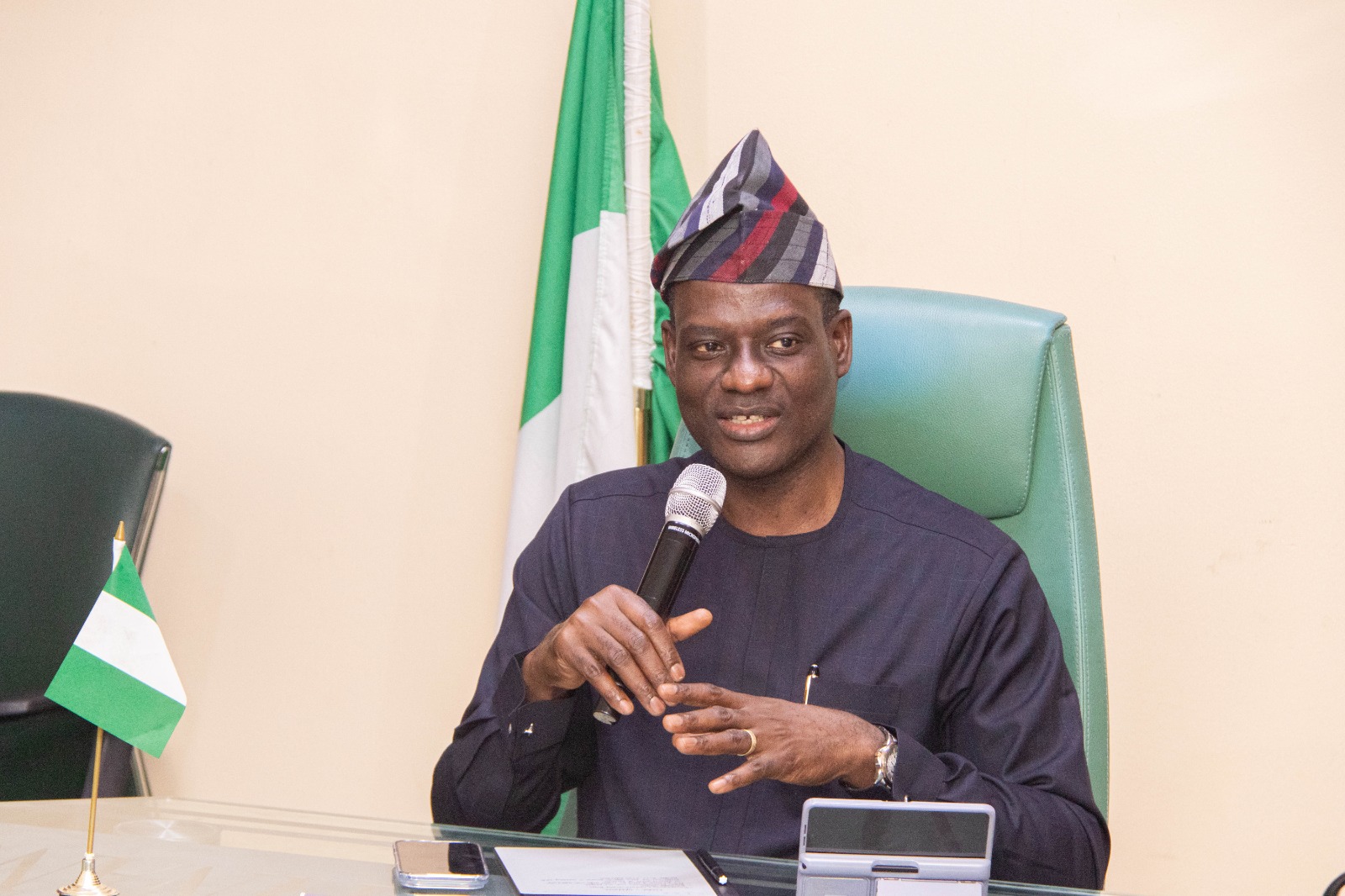
Being a Statement by the Economic and Fiscal Justice Coalition (EFJC) at the Meeting with the Minister of Finance and Coordinating Minister of the Economy, Mr. Taiwo Oyedele, Wednesday, July 8, 2026