By Prof. Robert Dussey

At the United Nations General Assembly last year, I spoke about justice, not only as a matter of history, but as a question of how Africa is positioned in the world today.
Justice is not only about reparations for slavery, colonisation, and the extraction of African wealth. It is also about symbols, systems, and tools that continue to shape how power is perceived and exercised globally.
One of those tools is the world map. For centuries, the Mercator projection has dominated classrooms, boardrooms, newsrooms, and diplomatic briefings.
It was designed in the 16th century to aid European navigation. It was never intended to represent the world accurately.
Yet it has become the default way billions of people imagine global size, distance, and importance.
Today, maps are under renewed global scrutiny. From viral social media debates led by high-profile commentators – there is a growing public recognition that maps do not merely describe reality, they shape it.
Cartography is power. And power, when left unexamined, reproduces inequality.
Africa can no longer afford to be passive in this conversation.
This is why I invited the United Nations, during my address to the General Assembly, to support the campaign to correct the map.
It is part of repositioning Africa not only in history, but symbolically and politically within the global system.
QIt aligns with a wider call for reparative justice – justice that is not only financial, but structural and narrative.
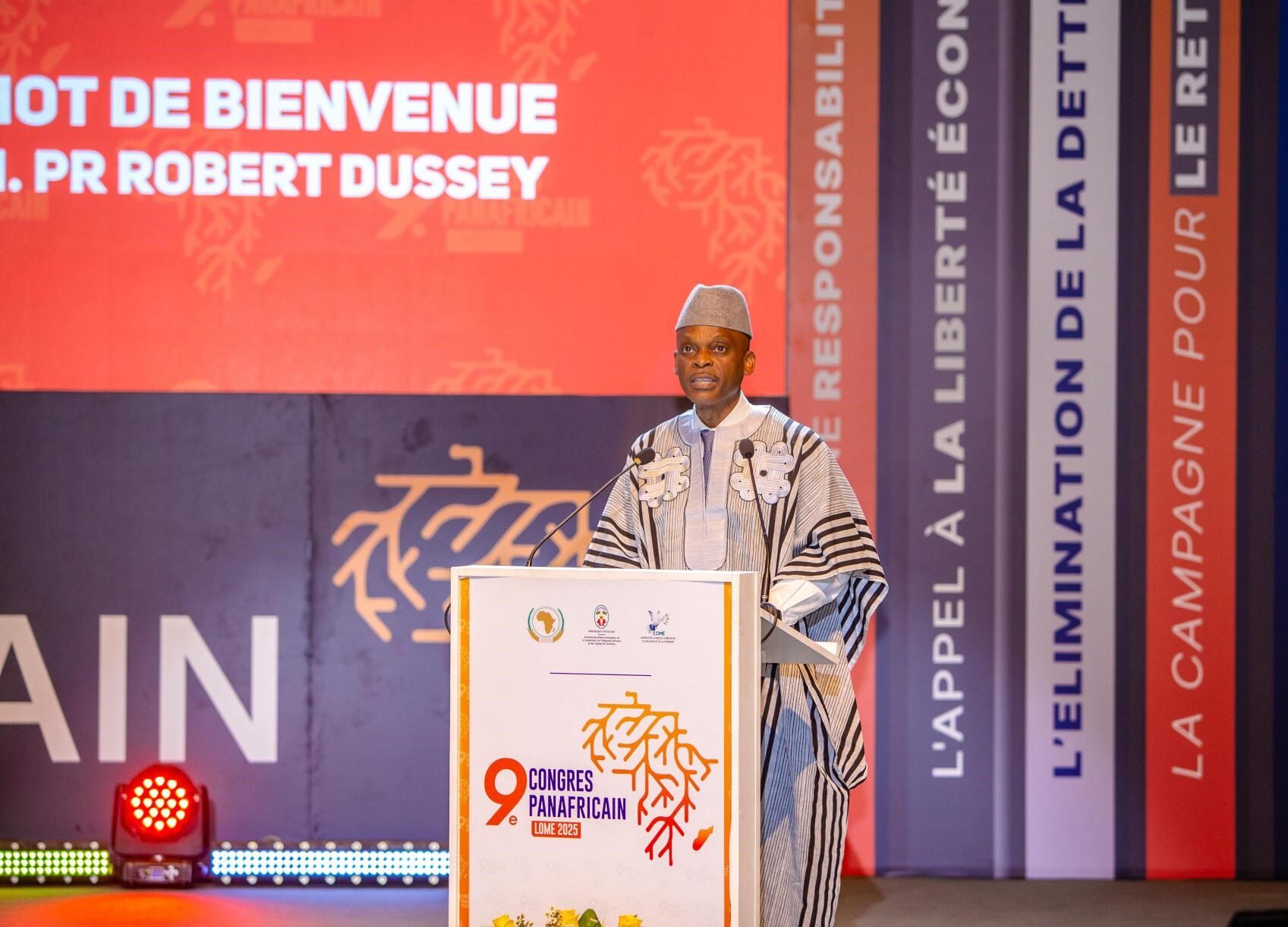
This conviction shaped discussions at the 9th Pan-African Congress, held recently in Lomé, Togo, under the theme “Renewal of Pan-Africanism and Africa’s Role in the Reform of Multilateral Institutions, recognising that how Africa is represented visually is inseparable from how it is treated politically within global systems.
I ensured that cartographic justice, including the *Correct the Map* campaign featured explicitly in the programme.
I am glad to see that the African Union has taken up this campaign too, with seriousness and vision.
By leading this conversation, it is showing the world that Africa is not rejecting the past; it is correcting it.
The “Correct the Map” campaign calls for the adoption of a more accurate projection of the world – the Equal Earth projection.
It asks that we bring back truth and agency and correct a symbolic imbalance that has real-world consequences.
Why does this matter now?
First, because Africa is asserting a clearer, more confident voice on the global stage.
Across discussions on reforming international financial institutions, climate justice, trade, and reparations, Africa is demanding that the systems themselves reflect reality and equity.
Correcting the map is part of that broader stance – a declaration that Africa will no longer accept inherited distortions, whether economic, political, or symbolic.
Second, because distorted maps have material consequences. How we imagine Africa’s size influences how we plan transport routes, railways, roads, and air corridors across vast distances.
It shapes how we model climate systems, assess security dynamics, and design regional infrastructure. Inaccurate tools lead to inaccurate conclusions, from development planning to disaster response.
It affects how we think about trade, the movement of goods and services across one of the largest contiguous landmasses on Earth.
It influences assumptions about market integration, supply chains, and economic potential under the African Continental Free Trade Area (AfCFTA).
It shapes how we understand migration and mobility within the continent – often wrongly portraying African movement as external and destabilising, rather than internal, economic, and historically normal across expansive spaces.
And it affects how the world understands what lies beneath our feet.
Africa holds vast reserves of gold, diamonds, platinum, iron ore, copper, cobalt, lithium, and rare earth minerals essential to the global green transition.
When Africa is visually minimised, its strategic significance is too easily underestimated.
Finally distortion has psychological consequences. Generations of African children have grown up seeing their continent shrunk on the wall of the classroom. That image quietly shapes confidence, ambition, and expectation.
When Africa is diminished in the mind, it is easier for the world – and sometimes Africans themselves – to underestimate Africa’s capacity, influence, and future.
Correcting the map is therefore also an act of dignity and what is needed now is political leadership to make accuracy the norm, not the exception.
The timing is critical. As the African Union approaches its annual Heads of States summit, this is a moment to align symbolism with substance.
To ensure that Africa’s growing economic, demographic, and geopolitical weight is reflected equally in the basic visual language through which the world understands itself.
Correcting the map will not solve all of Africa’s challenges. But leaving distortions unchallenged guarantees that outdated assumptions will continue to frame decisions about Africa – from investment to diplomacy.
Justice begins with truth. And truth begins with seeing the world as it is. The time to correct the map is now.
Dussey is the Minister of Foreign Affairs, Republic of Togo

