

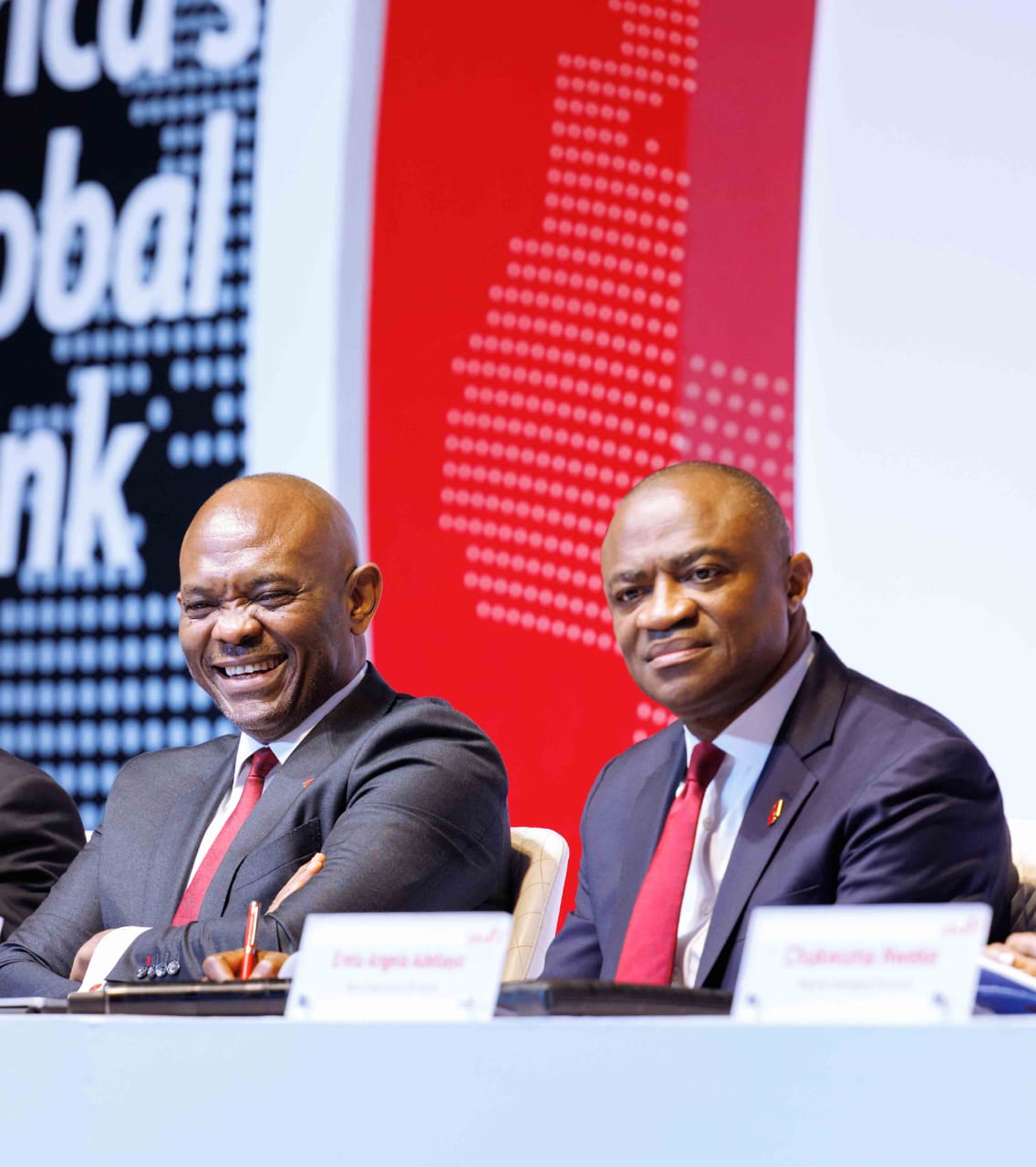
By Bassey Udo

Achieving sustained prosperity in any economy will be impossible without a vibrant private sector, the Group Chair, Heirs Holdings and United Bank for Africa, Tony Elumelu, has said.
Speaking on the topic: “The Private Sector as the Engine of Transformation” at the Abuja Business & Investment Summit & EXPO 2025 on Wednesday, Elumelu said the role of private sector leadership in Africa’s economic transformation cannot be overemphasized as more than 70 percent of Africa’s gross domestic product (GDP) and over 80 percent of total employment in the continent are contributed by the private sector.
The private sector, he pointed out, drives productivity, connects markets, mobilizes investments, and builds resilience.
“From fintech start-ups in Lagos to renewable energy firms in Nairobi, from agribusiness entrepreneurs in Kigali to manufacturing innovators in Johannesburg — the private sector is reimagining what is possible for Africa,” Elumelu said.
Drawing attention to the philosophy of Africapitalism, which, he said, drives everything being done at his company, Heirs Holdings, Elumelu said the private sector must lead Africa’s transformation by investing long-term in sectors that generate both economic prosperity and social wealth.
Beyond generating profit from its operations, he said leadership was also about generating progress.
“Africa’s private sector must lead with a sense of purpose by investing in skills development to empower Africa’s youth; championing sustainability and green growth amid industrialize; building inclusive value chains that bring small enterprises and rural communities into the growth milieu as well as driving digital transformation to unlock productivity and competitiveness.
On the impact of Heirs Holdings as the company celebrates its 15th anniversary, Elumelu said over the period it has been years of investments that create value, empower communities, and transform lives.
He listed the Group’s Investments in various sectors of the economy – ranging from the hospitality industry, power, oil and gas to banking – as a living testaments to its philosophy of Africapitalism.
Apart from Transcorp Hilton, which he said stands tall as one of Africa’s leading hotels, he said the facility has continued to expand with the unveiling eaely this year of the Transcorp Event Centre, a 5,000-capacity ultramodern space in Abuja as a business and tourism hub.
In the power sector, he said the Group’s investment in the Abuja Electricity Distribution Company (AEDC), which has franchise to supply electricity to the Federal Capital Territory, Abuja and environs, represents another example of private sector effort towards transformation.
Despite recording significant progress in its operations, Elumelu said challenges, in terms of unpaid obligations on power generated and sold to government agencies posed serious limitation on how fast the Group can move.
Regardless, he disclosed that across the Group, more than 7,000 Nigerians have directly and indirectly been employed
in Abuja alone, while over 24,000 young Africans, including 641 in Abuja, have been empowered each receiving non-refundable $5,000 seed capital, training, and mentorship through the Rony Elumelu Foundation.
Beyond the Group’s singular achievements, Elumelu spoke of collaborations with the government and development partners as the only way to ensure , sustainable transformation.
“We must build a new social contract between governments, businesses, and citizens—anchored in, transparency, and shared vision.
“Governments must create the enabling environment—sound macroeconomic policies, reliable infrastructure, and predictable regulations.
“In return, the private sector must uphold ethical standards, invest locally, and deliver tangible social impact,” he said.
Public-private partnerships, he noted, were the bridges that could turn ambition into achievement — whether in digital connectivity, agriculture, transport infrastructure or power generation.
For the private sector to deliver, he said the governemnt must support, sustain, and partner through guaranteeing certainty and “Predictable regulation to attract long-term investment, as inconsistency drives away investments.
“No investor will commit where the rules keep changing. We need consistency, rule of law, and infrastructure that enable businesses to thrive. Trust is the currency of investment — and policy stability converts trust into capital,” he said.
On financing investments, he observed that the rise of African investment funds, impact investors, and diaspora financing was changing the landscape, adding that Africa needs to deepen its capital markets, embrace fintech innovation, and expand access to credit for micro, small and medium enterprises (MSMEs) as the true backbone of the economies.
Elumwlu called for Nigeria to spearhead a continental movement of enterprise, where African businesses are not just consumers of global ideas, but creators of global value by investing in African innovation.
The Investment Summit organized by the Abuja Investments Company Limited was on the theme: “Private Sector Leadership at the Forefront of Africa’s Economic Transformation.”

