


By Bassey Udo

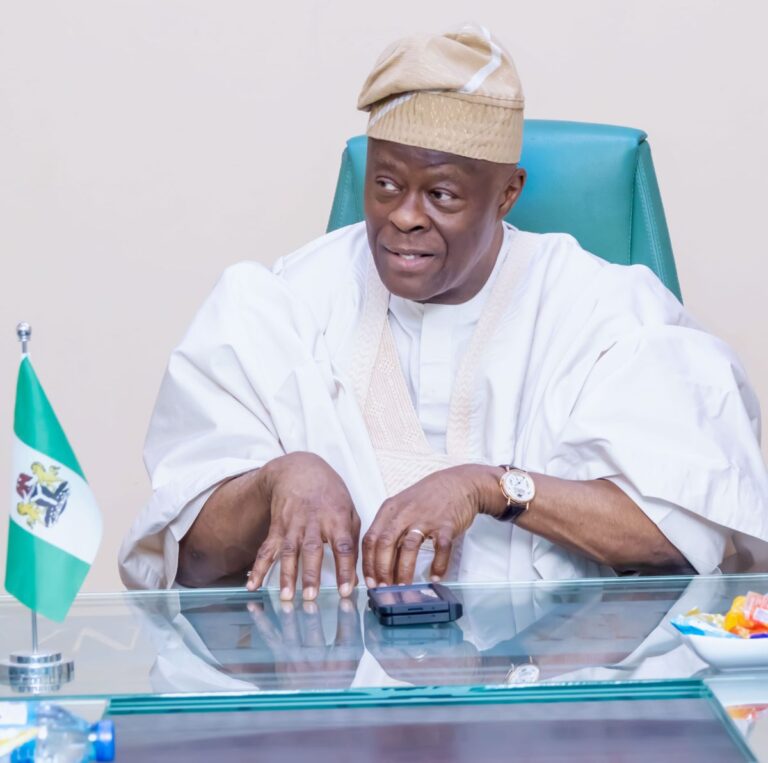
Africa requires urgent and bold reforms to combat the menace of illicit financial flows, Minister of Finance and Coordinating Minister of the Economy, Wale Edun, has said.
Edun spoke on Tuesday in Abuja at the opening of the 5th session of the sub-committee on tax and Illicit financial flows of the Specialised Technical Committee on Finance, Monetary Affairs, Economic Planning and Integration (STC – FMAEPI).
The conference organized by the Nigeria Revenue Service ( NRS) has as its theme: “Building the Africa we want through tax and fiscal policy”.
The Minister lamented that about $88 billion, which should have been invested in the development of infrastructure, education, healthcare, and the productive sectors of Africa economies, was finding its way as illicit finance flows into African annually, depriving the continent of meaningful economic development.
He said tax evasion and base erosion pose serious development challenges, including limited economic diversification, weak institutional capacity and continued dependence on external financing by Africa.
To overcome these challenges, he urged Africa to stand up to pursue the reforms under the Agenda 2063, which he noted, signals a clear pathway for sustainable development.
“Encouragingly, Agenda 2063 provides a clear pathway. Its priorities include strengthening tax systems and administration, maximising returns from natural resources, enhancing domestic savings and financial inclusion, developing capital markets, combating illicit financial flows and improving governance and reducing inefficiencies. These are not abstract goals. They are practical levers for transformation”, Edun said.
Underscoring the importance of bold reforms, Edun, who spoke on “The Imperative of African Fiscal Domestic Reform in a New World Order”, said this was what Africa would require urgently to màke progress.
“We gather at a defining moment for Africa’s economic future – one in which the question is no longer whether we must reform, but how urgently and how boldly we are prepared to act. Africa today is home to over 1.4 billion people, with immense natural and economic potential. Yet, our ability to translate that potential into sustained prosperity depends fundamentally on how effectively we mobilise and manage our own resources”
“The imperative for fiscal reform in Africa is not new. It is well articulated in Agenda 2063 – our collective blueprint for a prosperous and self-reliant continent. What is new, however, is the global context in which we must now pursue these ambitions,” Edun said.
Apart from providing a clear pathway to sustainable developmen, the Minister said Agenda 2063 prioritises the strengthening of tax systems and administration; maximizing returns from natural resources; enhancing domestic savings and financial inclusion; developing capital markets; combating illicit financial flows, and improving governance and reducing inefficiencies.
He said Africa’s fiscal reform agenda must focus on not only broadening the tax base through improved compliance and reduced leakages, but also strengthening public financial management to ensure transparency,
accountability, and value for money.
Besides, he said the agenda must promote domestic savings and financial inclusion to mobilize local
capital; develop robust capital markets to support investment and innovation as well as intensify efforts to combat illicit financial flows through stronger enforcement and cross-border cooperation.
He identified the enablers of sustainable reform to include strong and accountable institutions; digital infrastructure and data systems; regional cooperation and policy coordination and active citizen engagement.
Citing Nigeria as an example of African countries implementing reforms, Edun said that since May 2023, under the leadership of President Bola Ahmed Tinubu, the country implemented comprehensive tax reforms aimed at simplifying the tax system, broadening the tax base, reducing the burden on vulnerable populations, and improving compliance.
These reforms, which, he said, came into effect in January 2026, have strengthened transparency and accountability in the management of natural resource revenues.
The Executive Order 9 signed by the President, he said, stipulates that all oil and gas revenues are remitted into constitutionally designated accounts prior to disbursement, adding that the removal of fuel subsidies and the unification of the exchange rate have significantly improved fiscal transparency, reduced distortions, and strengthened investor confidence.
Besides, he said recently launched National Single Window system undertaken to enhance trade efficiency and reduce leakages, was an important step towards tackling trade-based illicit financial flows.
He challenged the Sub-Committee to build partnerships to help shape the policies and frameworks to strengthen Africa’s fiscal systems and safeguard its
resources.
The changing global landscape, he said, presents both challenges and opportunities, adding this calls for urgent action, considering that Africa not only has the resources, but the talent and institutional foundation to succeed.
“Let us seize this moment to deepen reform, strengthen cooperation, and build resilient economies that serve our people,” he said.
In his introductory remarks, Chairman, Nigeria Revenue Service (NRS), Dr Zacch Adedeji, said the development confronting African countries was as a result of the existence of financing gaps in the system.
Adedeji said it became an imperative for governments across the continent to finance infrastructure, strengthen social protection, support industrialisation, and address climate vulnerabilities while grappling with substantial losses of financial resources to illicit financial flows, tax evasion, aggressive tax avoidance and the like.
“Thankfully, within these challenges lies the opportunity to rethink the foundations of our development financing. Revenue authorities stand at the frontline of this opportunity. Tax administrations play a central role in building capable states.
Effective tax systems, the NRS boss noted, not only generate revenue, but also strengthen governance, deepen the relationship between citizens and the state, and provide the resources required for sustainable development.
He said when revenue systems are transparent, efficient, and fair, they reinforce public confidence in government institutions, pointing out that this was why strengthening revenue administration has become a central component of fiscal reform across Africa”.
These reforms, through a comprehensive transformation of tax administration systems in Nigeria, he noted, were part of Nigeria’s broader economic strategy aimed at strengthening domestic resource mobilisation, improving fiscal transparency, and creating a more predictable environment for investment and economic growth.
