


By Bassey Udo

Nigeria’s successful exit from the Financial Action Task Force (FATF) Grey List and the impending removal of the country from the list of high-risk third countries by the European Union (EU) were as a result of inter-agency collaboration and partnership, the Nigerian Financial Intelligence Unit (NFIU) has said.
NFIU is Nigeria’s financial intelligence agency responsible for collecting and analyzing disclosures from reporting organizations for the production of financial intelligence to agencies involved in the fight against money laundering, terrorism financing, associated with financial crimes.
The agency, which serves as the coordinating secretariat of the Inter-ministerial Committee on Anti-Money Laundering and Counter-Terrorism Financing (IMC), spearheaded the national effort to secure Nigeria’s removal from the FATF grey list by ensuring the country was fully compliant with international AML/CFT/CPF standards.
Apart from Nigeria’s removal from the FATF grey list in in October 2025,
The European Union (EU) has already announced its commitment to also remove Nigeria from the list of high-risk third countries at the end of January 2026.
Describing the two achievements as significant milestones in the country’s financial integrity reform journey, NFIU said these are reflections of a whole-of-government and whole-of-society approach to building strong barriers to illicit finance in the country.
The agency said a number of decisions by these global anti-money laundering and counter-terrorism financing bodies over the last few months have validated the extensive reforms implemented by the Federal Government since 2023.
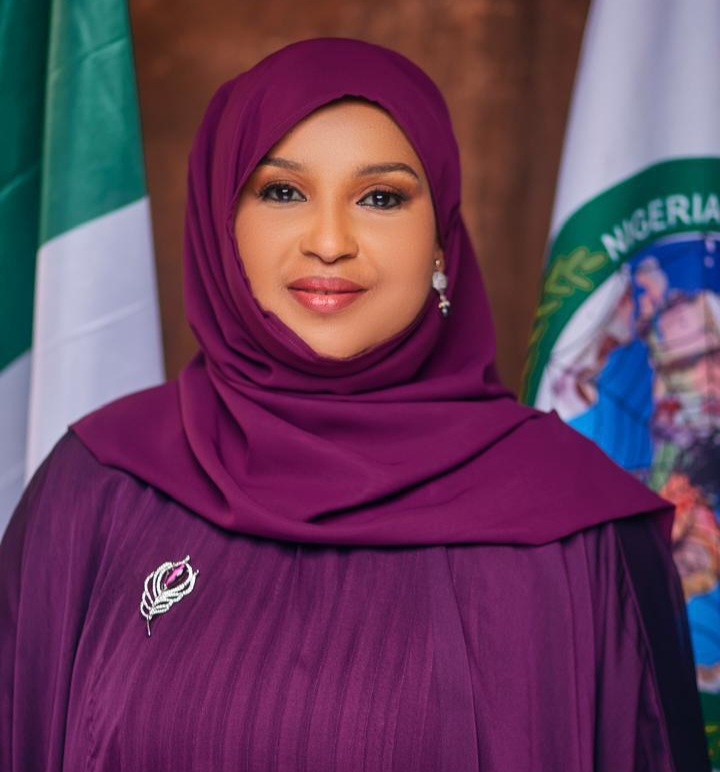
Consequently, the Chief Executive Officer of the NFIU, Hafsat Abubakar Bakari, said in recognition of these collective accomplishments, the agency acknowledges the profound appreciation to all Ministries, Departments and Agencies (MDAs), the Legislature, the Judiciary, the private sector and non-profit organisations whose coordinated actions and commitment made the outcomes possible.
“The decisions of the FATF and the EU are proof of the credibility of Nigeria’s reforms.
“Nigeria’s exit from the FATF Grey List and the European Union’s high-risk third country list reflects the strength of our collective resolve and the effectiveness of sustained, coordinated reforms,” Bakari said.
“These milestones underscore our commitment to upholding global standards on anti-money laundering, counter-terrorism financing and counter-proliferation financing, while reinforcing international confidence in Nigeria’s financial system,” she added.
Ms. Bakari noted that the success the NFIU has enjoyed would not have been possible without the guidance of President Bola Ahmed Tinubu and his commitment to building a safe and prosperous Nigeria.
She applauded the strategic leadership provided by the Attorney-General of the Federation and Minister of Justice, the Minister of Finance and Coordinating Minister for the Economy, and the Minister of State for Finance, Minister of Interior, as well the Inter-Ministerial Committee on AML/CFT/CPF, which ensured effective oversight, policy coherence and sustained momentum throughout the reform process.
Bakari also acknowledged the critical support by the Ministers of Aviation, Budget and Economic Planning, Defence, Industry, Trade and Investment as well as Solid Minerals Development, saying their interventions helped create a secure and enabling regulatory environment across priority sectors of the economy.
National coordination on security-related risks, she pointed out, was strengthened under the leadership of the National Security Adviser, particularly in addressing terrorism and terrorism financing through enhanced inter-agency collaboration.
Besides, she said effective supervision of the financial and non-financial sectors was reinforced by the Central Bank of Nigeria (CBN, the Securities and Exchange Commission (SEC)}, the National Insurance Commission (NAICOM)¢, and the Special Control Unit Against Money Laundering (SCUML) of the Economic and Financial Crimes Commission (EFCC by, through improved risk-based supervision, enhanced market entry controls, effective suspicious transaction reporting as well as application of targeted financial sanctions.
Progress on corporate transparency, the NFIU boss said, has been driven by the Corporate Affairs Department, alongside the Nigeria Export Processing Zones Authority (NEPZA) and the Oil and Gas Free Zones Authority(OGFZA), through the deployment of robust systems that aligned with international best practice.
She said law enforcement outcomes were strengthened through the work of the Nigeria Police Force, EFCC, Independent Corrupt Practices and Other Related Offences Commission (ICPC), Department of State Services (DSS), Defence Intelligence Agency (DIA), National Drug Law Enforcement (NDLEA) and the Code of Conduct Bureau (CCB), particularly in the investigation and prosecution of high-risk predicate offences.
At Nigeria’s borders and ports of entry, Bakari said the Nigeria Customs Service (NCS), Nigeria Immigration Service (NIS), Federal Airports Authority of Nigeria (FAAN) and the Nigeria Civil Aviation Authority (NCAA) played a vital role in detecting and prosecuting cross-border cash smuggling and the illicit movement of high-value goods, with the EFCC supporting these efforts through world class investigative and prosecutorial capabilities.
In addition, she said safeguards within the non-profit sector were enhanced through the efforts of SCUML and its domestic and international partners, strengthening protections against terrorist abuse.
“The successful delisting of Nigeria from the FATF Grey List and the EU AML/CFT list is a clear signal that our reforms are deep, credible and sustainable,” the NFIU CEO said to further highlight the importance of sustained collaboration, which reflects years of disciplined implementation across government, law enforcement, the judiciary and the private sector.
“Strong prosecutorial outcomes and international cooperation were achieved through the leadership of the Federal Ministry of Justice, particularly in securing convictions, facilitating mutual legal assistance and enabling the recovery and repatriation of illicit assets.
“The Judiciary, especially the Chief Judge and Justices of the Federal High Court, is commended for timely adjudication and the imposition of proportionate and dissuasive sanctions which serve as an effective deterrent.
“Legislative backing from the President of the Senate, Speaker of the House of Representatives, Principal Officers of the Senate and House, Chairmen, Senate Committees on Anti-Corruption and Financial Crimes, and Judiciary, Human Rights and Legal Matters and, the Chairman, House Committee on Financial Crimes, provided the effective legal foundation required to sustain reforms,” she said.
She noted the contributions of the private sector and non-profit organisations, particularly compliance officers across financial institutions, designated non-financial businesses and professions, and virtual asset service providers, remains central to the effectiveness of Nigeria’s AML/CFT/CPF framework.
Reaffirming Nigeria’s forward-looking posture, the NFIU CEO added: “This achievement belongs to Nigeria and its partners. The NFIU remains steadfast in its resolve to deepen cooperation, enhance intelligence-led supervision and ensure that Nigeria continues to meet and exceed global AML/CFT/CPF expectations.”
As Nigeria consolidates these gains and begins preparation for its next AML/CFT/CPF Mutual Evaluation, she said NFIU has reaffirmed its commitment to continued partnership, vigilance and innovation to safeguard the integrity of the financial system.
