


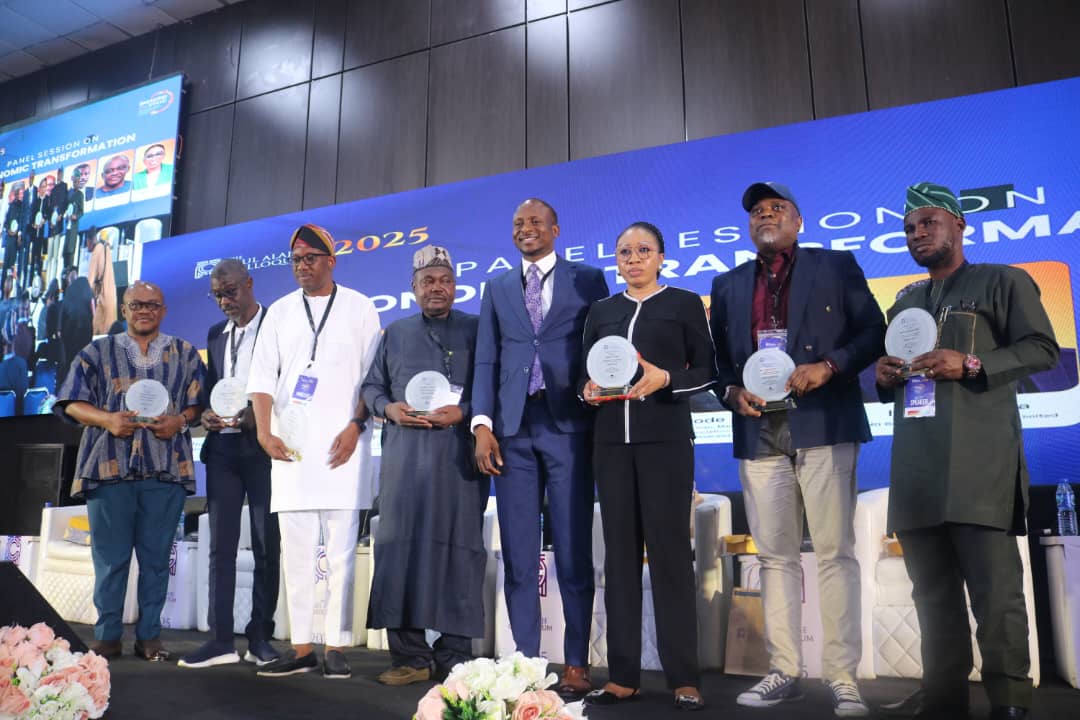
By Bassey Udo

Speakers and economic experts as well as participants in the 2nd Paul Alaje Colloquium 2025 held in Abuja on Saturday said Africa’s renaissance was awaiting Nigeria’s socio-economic and political rising as the country was at the heart of the continent’s development and growth paradox.
The experts, which include Kenyan ace poitical activist and Professor of Public Law, P.L.O Lumumba; the Global Board Chairman, Africa International Chamber of Commerce and Industry (AICCI), African Panel, Dr Wallace Williams; wife of former President Olusegun Obasanjo, Bola; convener of the colloquium, Dr. Paul Alaje, who is also a renown economist and senior partner at SPM Professionals, spoke on the theme: “Breaking the Cycle: How Nigeria Can Lead Africa from Poverty to Prosperity.”
Dr Williams who represented Prof Lumumba at the event said although Africa remained a continent of remarkable promise, persistent challenges have continued to dog its path.
“Our people are talented, our cultures vibrant, and our land richly endowed. Yet millions still struggle with poverty, inequality, and fragile economies. Nigeria, Africa’s most populous country and one of its largest economies, sits at the heart of this paradox. And it is precisely for this reason that Nigeria’s leadership matters—because Nigeria’s trajectory influences the continent’s direction,” he said.
Lumumba who addressed participants in a brief virtual presentation from Nairobi said because of the unique position Nigeria occupies as the largest economy in Africa, in terms of population size and natural endowment potentials, Africa cannot realise its full potentials without Nigeria leading the way.
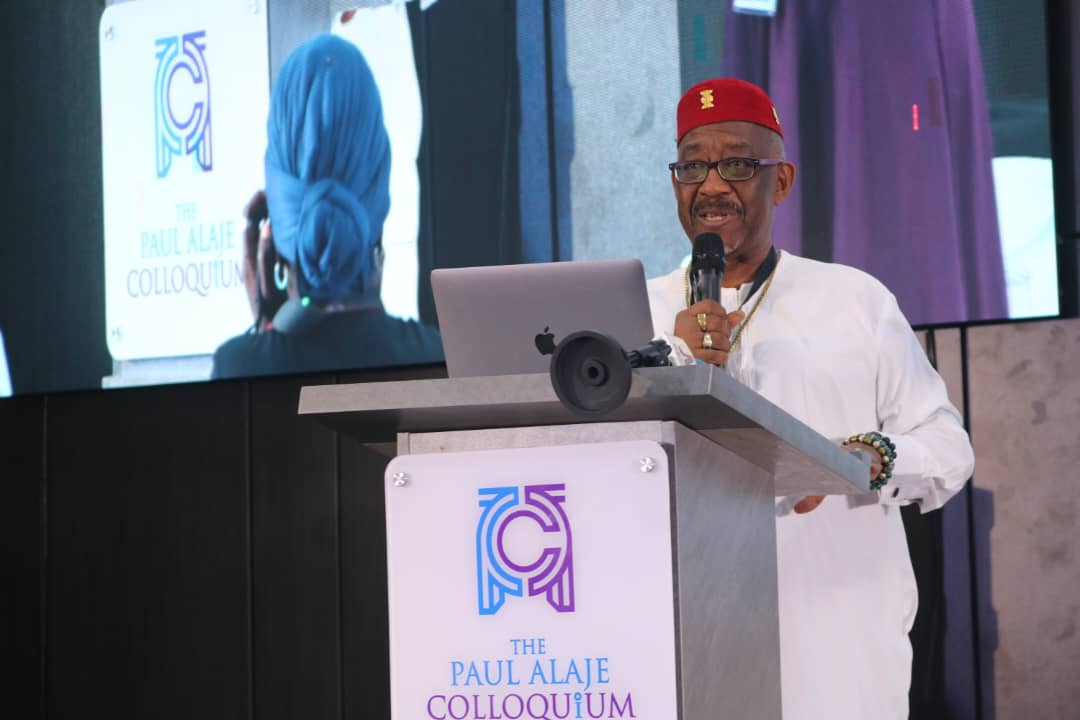
Williams, who represented the said no one sector can transform Africa alone, pointing out that Nigeria’s commitment to reform and resilience has sent a clear message that Africa can rewrite its story through courage, discipline, and strategic action.
Making a case for regional collaboration, Williams said the solution to Africa’s challenges, in terms of conflicts that spill across borders, volatile markets, infrastructure deficits, energy shortages, unemployment, and food insecurity, depended on building interconnected regional value chains driven by innovation, production, and trade.
He said Africa must strengthen its regional institutions and align their policies to unlock growth, adding that the coming of the African Continental Free Trade Area (AfCFTA) represents one of the greatest opportunities in the continent’s history.
With a unified market of over 1.3 billion people from the 54 member countries and $3.4 trillion GDP offers Africa the chance to expand intra-African trade, reduce poverty, drive industrialization, create millions of jobs and strengthen Africa’s global competitiveness.
For AfCFTA to succeed in achieving set objectives, Williams said it must be backed by a political will, accountability, and commitment to implement the agreement signed by member countries, with Nigeria playing the crucial leadership role.
To break the vicious cycle of poverty and prosperity, Williams said Africa must prioritise structural and policy reforms to create consistent, predictable, and investment-friendly policy environments and ensure regional integration to harmonize regulations, standards, and industrial strategies.
Also, he stressed the need for innovation and industrialization by investing in renewable energy, digital transformation, manufacturing, and technology-driven SMEs; ensure good governance and leadership through transparency, integrity, discipline, and public accountability, as well as ensure sustainable development finance by mobilising domestic resources, deepening capital markets, and reducing excessive reliance on foreign aid.
Africa’s progress, he said, depends on the continent’s ability to collaborate, coordinate, and act collectively, adding that with commitment and unity, Africa can transcend its challenges.
“We must adopt a continental mindset. We must think beyond borders. We must embrace cooperation over competition. Africa’s prosperity is a shared project—one that requires patience, courage, vision, and continental solidarity,” he said.
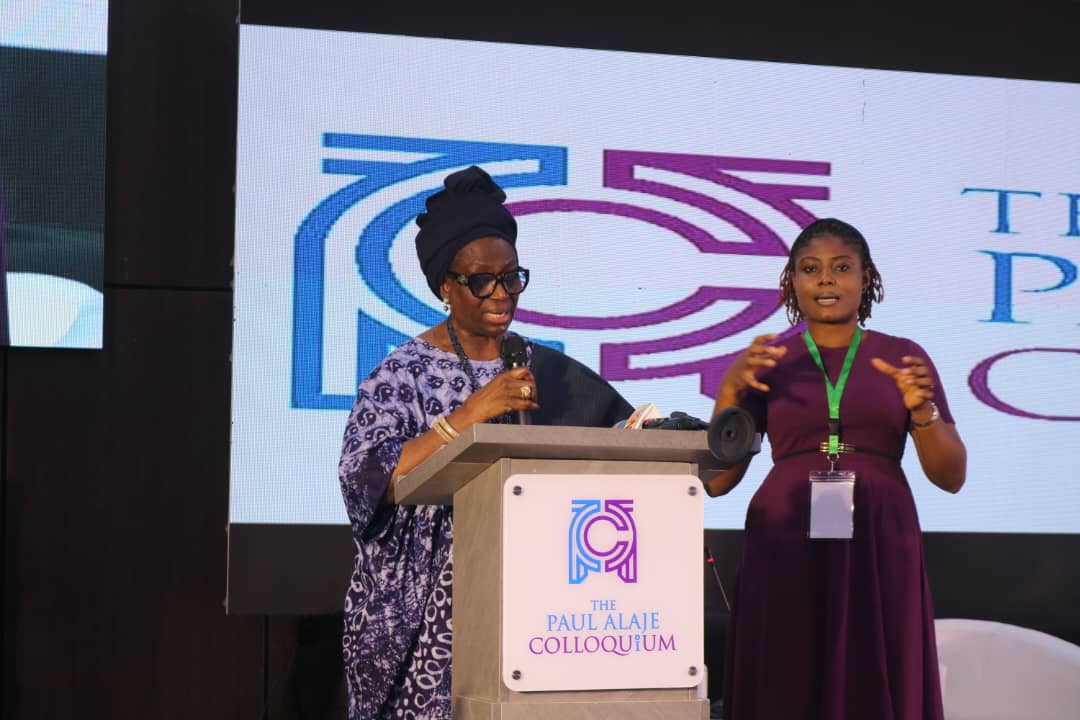
Mrs Obasanjo, who was the special guest at the event, spoke on the topic: “Empowering Women for Sustainable Development and Inclusive Growth.”
She said although women make up half of Nigeria’s population and are the heartbeat of most homes, the foundation of the communities, and drivers of the informal economy, they remained grossly underrepresented in leadership positions, underpaid for their labour, and undervalued in decision-making.
Capturing the importance of women in national development with her analogy of a bird not able to fly with one wing, Mrs Obasanjo said any development that leaves women behind was not development at all.
“If Nigeria must break the cycle of poverty and lead Africa toward prosperity, women must be at the heart of that transformation. In Nigeria, empowering women is not simply a matter of fairness, it is a strategic necessity,” she said.
Sustainable development, economic growth, and good governance, she pointed out, are impossible without women’s full participation, adding that Nigeria must lead by example in creating spaces where women’s voices shape policy, politics, and progress.
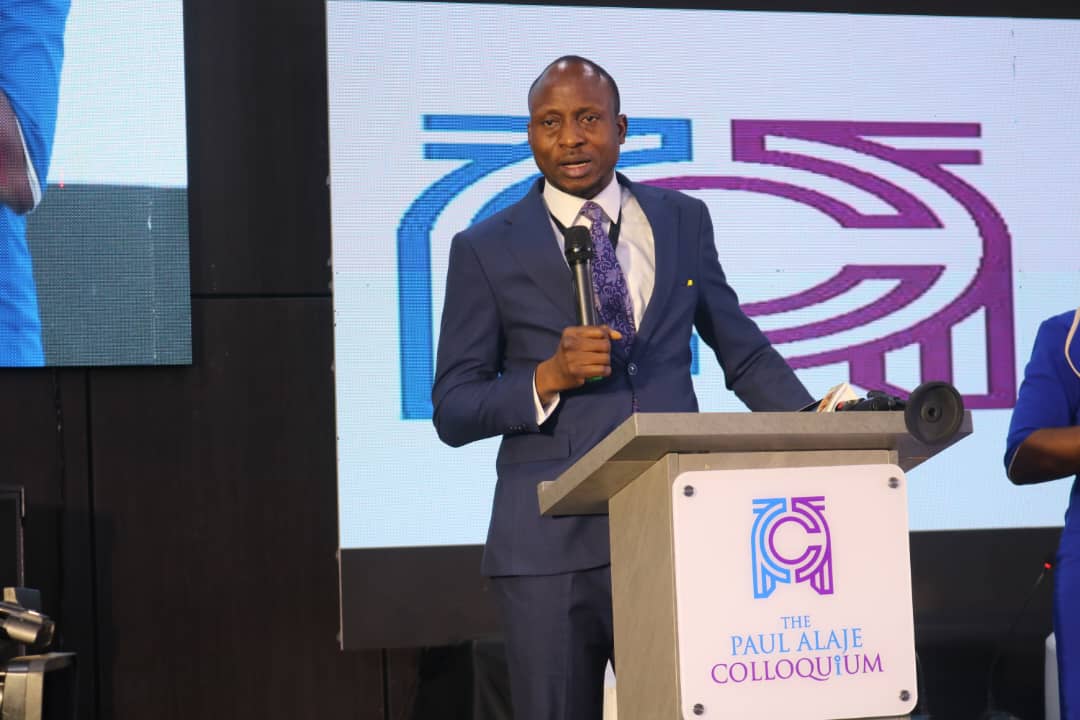
With Africa’s rich natural resources, vast land, large vibrant youth population, Alaje said Africa’s poverty was not simply a failure of resources, but a failure of systems and failure to convert its potential into productivity, as well as ambition into action.
The continent’s greatest enemy, he pointed out, was not lack, but under-utilization of its potentials and endowment, adding that poverty was not just a shortage of income, but a systematic condition where people lack the means, systems, and trust to fully realize their potential.
He said until system was broken, the people would continue to remain trapped in the vicious cycle, which he said thrives with weak or captured institutions, fragile governance, low productivity and high underemployment, insecurity that destroys lives and markets, exclusion from innovation and technology, educational deficits and a lack of marketable skills as well as limited cross-border economic and social integration.
Africa, he noted, suffers not just from poverty, but from disconnectedness, pointing out that despite being a continent of 1.4 billion people, the people hardly trade with each other.
Apart from low intra-African trade, Alaje said the movement of people remained difficult, as a result visa restrictions, high costs, and poor transport infrastructure that make cross-border travel a daily struggle.
Poverty, he stressed, was not just economic, but also socio-political and relational, adding that unless the system that sustains it was broken, it would keep breaking the people.
To break the vicious cycle, Alaje said Africa must invest massively in education and skill development, implement a state-led industrial strategy to back key sectors, build strong institutions and disciplined governance, and embrace technology, exports, and innovation.
Citing how post-war West Germany, Singapore, Botswana and Rwanda came out of poverty, Alaje said they did not do so by accident, but with deliberate actions designed to re-establish institutions, support SMEs and vocational training and building an export-driven, social-market economy.
Apart from building meritocratic institutions, transparent public service, strategic industrial planning and a social compact that paired growth with social cohesion, he said these countries pursued disciplined reforms that focused on national security and governance, technology-enabled delivery of services, reconciliation combined with economic ambition, and strong institutions that drive accountability and performance.
To transform Nigeria’s economy to be able to lead Africa’s transformation, Alaje said the country must build her economy to promote production, not consumption, by stopping importation of what we can produce competitively.
“Africa must shorten its value chains — from farm to factory to market, while Nigeria’s abundant arable land must feed not just its population, but its industrial ambitions. Minerals must be refined on our soil, while agricultural produce must be processed in factories on our continent,” he said.
Besides, he said regional value chains and cross-border industries must be promoted to integrate African corridors and ensure factories in Nigeria connect to suppliers in Ghana, Kenya, and Senegal, while logistics systems tie capitals, ports, and markets together.
Others include support to SMEs with blended finance, de-risk capital with government guarantees, concessional loans, and export incentives, investing in human capital development, universal health and nutrition to build productive citizens, modernising transport infrastructure and guaranteeing macroeconomic stability.
On governance and institutions, the ace economist said the country’s fight against corruption must be seen to be real, not symbolic, adding that governance reforms must not be only within Nigeria, but also in how we work with other African neighbours.
On security, he said sincere efforts must be made to achieve territorial, internal, food and economic security.
For a new pan-African society to emerge, he said Africa must build regional value chains, strengthen cross-border infrastructure, create regulatory frameworks that encourage trade among African nations, and reduce the visa burdens and bureaucratic obstacles that hold people back.
“African leaders must stand for institutions that last; youth must embrace technology, lead businesses, demand better systems; private sector must build for Africa, not just for profit, while institutions must reform boldly, act transparently, serve humbly.
“We must end the cycle of poverty by building an integrated Africa — economically, politically, socially,” he said.
Earlier, the Chairperson of the Local Organising Committee of the Colloquium, Fehintoluwa Oduekun, in her welcome remarks said the theme of the colloquium was conceived to ask how Nigeria, despite its current challenges, but with its inherent potentials, could become the catalyst that transforms the entire African continent?
She said the colloquium provided the forum for participants to share ideas on not only why Africa, despite her endowment in abundant natural resources, a youthful population bursting with innovation and creativity, and a resilience forged through centuries of adversity remained trapped in cycles of underdevelopment, poor governance, and economic underperformance, but also how to break the cycle and ensure that we do not fall back into it again.
