By Akpandem James
Every year, about this time, governments across the Federation, at local, states and federal levels, shift attention to fiscal proposals for the incoming financial cycle.
By then, the Medium-Term Sector Strategy (MTSS), which distills long-term policy goals into a concrete, actionable plan for the government, and the Medium-Term Expenditure Framework (MTEF), which sets government’s fiscal and budgetary objectives to align expenditure with current economic realities, must have been concluded to provide a clear picture of expected income and expenditure.
These documents inform the appropriation bills by the executive arm of the government sent to legislatures for scrutiny and approval, prior to the final assent for implementation.
So far this year, at least 11 states have reached the budget proposal stage, with Lagos presenting the largest package of N4.237 trillion.
Following is Delta State with N1.664 trillion, which accounts for only 39.3% of Lagos’s proposal.
Other states are: Abia (N1.016 trillion), Katsina (N897.9 billion), Oyo (N892 billion), Ebonyi (N884.87 billion), Bauchi (N878 billion), Cross River (N780.6 billion), Anambra (N757.88 billion), Yobe (N515.6 billion) and Ekiti (N415 billion).
On Tuesday, November 26, Akwa Ibom State presented its proposal of N1.39 trillion, the third largest so far, although still significantly lower than that of Lagos.
All the states have ambitious plans to impact the different sectors of their economy.
Incidentally, eight of the 11 states are currently under the All Progressives Congress (APC) governors.
The alignment of the proposals with President Bola Ahmed Tinubu’s reformist agenda ahead of the 2027 elections was evident in the states governed by the APC.
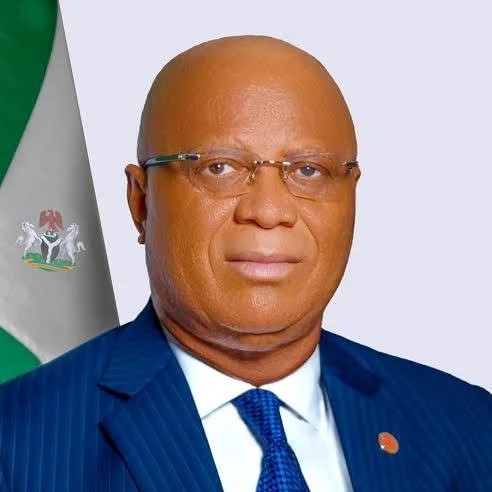
Akwa Ibom, historically a stronghold of the Peoples Democratic Party (PDP), is now almost entirely APC following Governor Eno’s defection last June, resulting in 30 out of the 31 local councils shifting their loyalty to the APC.
The ambitious proposals by these state governors are built on improved revenues.
Since the removal of fuel subsidy, state governments have received substantially higher monthly allocations from the Federation Account.
This expanded fiscal space has enabled subnational entities to pursue extensive capital and recurrent programmes.
According to Governor Eno, “Today, from agriculture to rural development, from infrastructure to security and educational advancements, tourism to healthcare, promotion of SMEs (small and medium enterprises) to sports, housing, transport, among other key sectors, we are undertaking bold and audacious projects without borrowing and have earmarked resources to complete all the projects we have initiated”.
Governor Eno highlighted achievements under his administration’s ARISE Agenda to include support for 69,000 farmers and new agro-initiatives, especially in palm oil production; construction of over 900 kilometres of roads, including 78 feeder roads; development of model schools; payment of bursaries for students; and significant upgrades in the health sector, including the recruitment of 3,300 health workers.
Social investment programmes include 335 compassionate homes, elder peoples support schemes and poverty alleviation projects targeting nearly 50,000 beneficiaries.
Furthermore, the establishment of a Security Trust Fund to enhance safety, the development of the Convention Centre, the renovation of hotels and the establishment of planned communities are other areas the governor highlighted as being of particular attention for his administration since its inception.
A major thrust of the state’s 2026 budget proposal is rural development, which the governor described as central to reducing rural–urban migration.
Each local government area, he said, is expected to benefit from community-driven projects in roads, water supply, education and health services.
He called for political unity ahead of the coming elections and reaffirmed the state’s commitment to security and social stability.
On social protection, he cited expanded commitments to gratuities, food support programmes and grants worth over ₦9 billion targeted at vulnerable households.
Records of the 2025 budget of ₦1.65 trillion (revised) showed strong revenue collection and expenditure performances, with capital expenditure achieving 91% performance.
Based on the 2025 performance and current realities, the state government has proposed a budget of ₦1.39 trillion for 2026, reflecting a 16% reduction from the 2025 appropriation, but prioritising infrastructure and growth, with allocations of ₦387.5 billion for roads and infrastructure, ₦136.1 billion for health and ₦31.6 billion for education.
The state is projecting a recurrent revenue of ₦1.146 trillion, indicating a strategic adjustment to meet fiscal targets.
The total Capital Receipts and Expenditure for the year 2026 is estimated at N1.035 trillion, as against the approved revised provision of N1.224 trillion for 2025.
Projected Capital Receipts show that N791.978 billion will be transferred from the Consolidated Revenue Fund, while the balance of N243.155 billion is to be realised from other capital receipts.
“The outcome of this budget is based on citizens’ input documents as submitted to the government during the state-wide Town Square Meetings or Needs Assessment. In other words, it is a citizens-oriented budget,” the governor pointed out.
A large chunk of the budget, dubbed “The People’s Budget of Expansion and Growth,” is devoted to capital expenditure, with a provision for ₦1.035 trillion (75% of the total budget outlay), ₦354.9 billion (25%) for recurrent (personnel and overhead) expenses. L
At a glance, this signals a strong push for infrastructure and development. In other words, the government aims to pursue a capital-heavy plan, focusing on infrastructure, rural development, agriculture and social upliftment, with a lower recurrent burden.
The governor emphasised that his policy focus is on food security, rural development, infrastructure completion, security improvements, educational enhancements, economic diversification and tax reforms for greater compliance.
It is an ambitious budget, no doubt. It emphasises substantial capital investments and a wide-ranging sector focus, with a determined commitment to growth and citizen-centred priorities.
Notably, Governor Eno stated that the government is priming and preparing the state for sustainable development through various streams of income by utilising previously moribund assets.
This approach signposts a potential to drive significant advancements, particularly if projects are effectively completed and sustained.
Still, risks remain. Heavy capital spending, low recurrent allocations and reliance on volatile revenue sources, have the potential of weakening long-term sustainability if not carefully managed.
Underfunded social services, unfinished projects or maintenance backlogs are potential pitfalls too.
While it may seem easier to manage at first glance, the significant focus on capital and limited recurrent funding could hinder the long-term sustainability of services or infrastructure.
The issue of sustainability is key. Implementation and accountability are, therefore, fundamental factors in the overall successful execution.
Ultimately, the success of the budget will depend less on its size and more on disciplined execution, sustained oversight and transparent reporting.
Poor oversight or execution capacity may defeat even well-intentioned budgets.
Governor Eno appears conscious of these tendencies and has pledged to uphold accountability, fiscal discipline and value for money, maintain compliance with the State Fiscal Responsibility and Public Procurement laws, curb leakages and publish regular financial updates.
Whether these commitments translate into real impact will depend on consistent monitoring, strong institutional capacity and firm adherence to implementation timelines.
James, a Fellow of the Nigerian Guild of Editors, writes from Abuja