


By Bassey Udo

It is time civil society organisations (CSOs) raised their game and ensured their roles under the global Extractive Industry Transparency Initiative (EITI) framework were elevated beyond routine advocacy, the Executive Secretary of the Nigerian EITI, Orji Ogbonnaya Orji, has said.
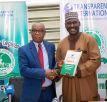
Orji who spoke on Monday during a visit to the Civil Society Legislative Advocacy Centre (CISLAC) headquarters in Abuja urged CSOs to move from simply demanding accountability from the government and its agencies to providing knowledge-based, evidence-driven, and solution-oriented leadership that adds real value to governance.
Under the ongoing global governance debate, Orji said CSOs must lead the agenda in energy transition accountability by not only developing scorecards that track government and company commitments, but also shaping community transition plans to ensure no one was left behind.
#
He called on CSOs to go beyond demanding contract and beneficial ownership disclosures, to analysing them, interpreting risks, and distilling lessons for policy and citizens’ benefits.
Besides, he enjoined CSOs to engage more on resource mobilisation and fiscal justice, provide alternative policy options on revenue, subsidy reforms, debt sustainability, and equitable development, while being vigilant in curbing illicit financial flows, building civic observatories, and collaborating with investigative journalists, financial intelligence units, and global watchdogs.
“Across the world, civil society organisations have proven indispensable in shaping governance outcomes. They amplify citizen voices, defend transparency norms, and catalyse reforms that governments and companies alone cannot deliver.
“Within the Extractive Industries Transparency Initiative (EITI), civil society has remained the conscience of the process—demanding disclosures, safeguarding civic space, and ensuring that reforms translate into meaningful impacts for citizens.
“Globally, CSOs have influenced the direction of international aid, the design of poverty alleviation programmes, and the building of institutions. They have elevated debates on tax justice, climate accountability, illicit financial flows, and debt transparency issues central to sustainable development,” he said.
However, in a new era defined by energy transition, digitalisation, and fiscal pressures, Orji implored CSOs to redefine and strengthen their role to remain impactful in the years ahead.
On how NEITI has supported civil society to create the necessary impact, Orji said the agency has deliberately created institutional linkages by reinvigorating the Inter-Ministerial Task Team to follow up on audit recommendations, and strengthened the Companies Forum to bring government, industry, and citizens into regular dialogue.
Also, he said NEITI is building a Data Centre, an automated platform to house real-time disclosures on revenues, contracts, ownership, host community funds, and energy transition.
In addition, he said NEITI signed Memoranda of Understanding with various anti-graft agencies, namely the Economic and Financial Crimes Commission (EFCC), Independent Corrupt Practices and other Offences Commission (ICPC), and Nigerian Financial Intelligence Unit (NFIU), with similar agreements are being concluded with the National Bureau of Statistics and the Nigerian National Petroleum Company Limited (NNPC Ltd).
While these agreements would be followed by joint technical committees to drive implementation, he said these were all open windows for civil society to gain deeper access to partners in government and the extractive industries, and to leverage them in making civic work more visible and impactful.
He announced that the NEITI 2024 industry reports in oil, gas, and solid minerals were currently underway and expected before the end of the year.
Acknowledging CISLAC as an institution that has, over the years, earned an enviable reputation as a strong voice for civic advocacy, governance reform, and the protection of democratic space in Nigeria, Orji called on the organization to continue to work closely with NEITI to lead the debate within the civil society constituency.
“The time has come for CSOs to look inward and embrace the new agenda that elevates their roles from monitoring NEITI to providing broader oversight of the extractive industries, from routine advocacy to knowledge leadership, from episodic interventions to structured impact,” he said.
In his welcome address, the Executive Director of CISLAC and Head of Transparency International Nigeria, Comrade Auwal Musa Rafsanjani, reflected on the shared history that has bound CISLAS and NEITI since Nigeria’s pioneering adoption of the EITI in 2003.
He expressed pride that CISLAC was one of the civil society organizations that advocated for the establishment of EITI in Nigeria, adding their partnerships over the years cut across policy dialogues, public awareness campaigns, host community engagements, beneficial ownership transparency advocacy, and joint efforts to amplify audit findings and demand accountability.
Rafsanjani commended NEITI’s role in providing critical data that has exposed gaps, saved billions, and informed policy decisions, while urging renewed focus on translating reports into sub-national actions and ensuring tangible impacts for extractive communities.
The Executive Director of CISLAC proposed opportunities for a reinvigorated partnership, such as tracking NEITI audit recommendations, legislative advocacy for strengthening laws like the Petroleum Industry Act, capacity building for journalists and parliamentarians, and protecting civic space in extractive governance.
