


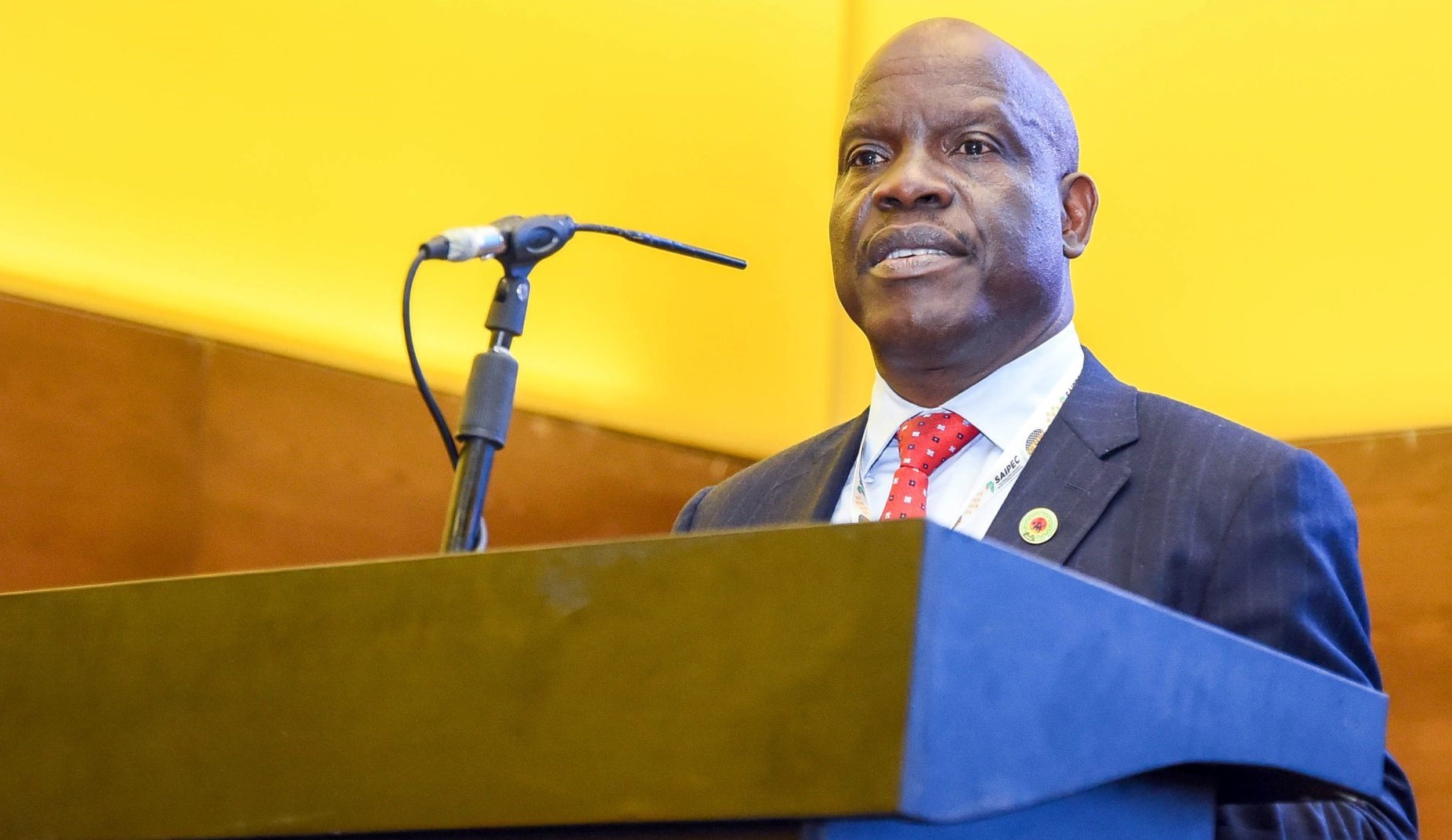
The Nigerian Upstream Petroleum Regulatory Commission (NUPRC) on Thursday stretched her hand of partnership to global investors to join in unlocking the country’s vast potential to shape the future of energy in Africa and beyond.

The Commission Chief Executive, Engr. Gbenga Komolafe, made the gesture at the 2025 Africa Energies Summit, rounding off in London, United Kingdom.
Engr. Komolafe, who presented a keynote address titled “Igniting Nigeria and Africa’s Energy Future: Evolving Landscapes, Challenges, and Transformative Opportunities,” said today Nigeria stands as a premier business destination for prospective invested interested in developing Africa’s energy sector.
He said Nigeria is uniquely positioned at the major intersection of Africa’s energy future and global investment opportunities for investors interested in exploiting for growth and development.
“With its vast hydrocarbon resources, progressive reforms and a strategic vision anchored on sustainable development and energy security,
Nigeria offers unmatched prospects for investors, industry players and partners seeking growth in the continent’s most dynamic market,” the CCE said.
Referencing the 2024 edition of the Summit, Engr. Komolafe recalled that the gathering not only ignited meaningful dialogue among stakeholders, it also opened a gateway to investment prospects across Nigeria’s upstream oil and gas sector.
“It was more than just an announcement of opportunities. It was a powerful reaffirmation of our shared vision to strengthen energy security as the cornerstone of economic growth, national resilience and social prosperity.” he stated.
He said that with renewed purpose and a visionary outlook, the Commission was poised to unveil some strategic initiatives to expand oil and gas exploration, accelerate production and reinforce the foundations of Nigeria and Africa’s evolving energy landscape.
He spoke on efforts so far made by the Commission in the areas of decarbonization and rising global energy demand, catalyzing exploration opportunities, quality and accessibility of subsurface data,
transformative reforms, the transformative impact on investment inflows, sustaining value creation, the project One Million Barrel Initiative, among others.
The present administration in Nigeri, he pointed out, has implemented bold reforms that have transformed the upstream oil and gas sector into a transparent, competitive and investor-friendly landscape.
The CCE noted that the NUPRC, empowered by the Petroleum Industry Act (PIA), has introduced globally competitive fiscal terms, streamlined regulatory processes and pragmatic entry fees, all designed to attract and retain investment.
These reforms, he noted, have resulted in a surge of investor interest, with rig counts increasing from eight in 2021 to 36 today, with high expectations for it to reach 50 by year-end.
Also, he said the government’s commitment to ease-of-doing-business is further demonstrated through Presidential Executive Orders aimed at providing tax incentives, exemptions and remissions, reducing contracting costs and timelines, eliminating operational bottlenecks, enhancing local content compliance and stimulating non-associated gas development, among others.
He said these initiatives collectively position Nigeria as a destination of choice where opportunity meets certainty and value creation.
This momentum, he pointed out, reflects a bold new chapter driven by ambition, resilience and opportunity.
Reviewing the impact of investment flow to Nigeria, Engr. Komolafe described it as remarkable, adding that Nigeria boasts as Africa’s largest natural gas reserves at 210.54 trillion standard cubic feet and 37.28 billion barrels of proven crude oil reserves.
The country, he confirmed, is actively pursuing a crude oil production target of three million barrels per day, supported by initiatives such as the Project 1 Million Barrels per Day (1MMBOPD), which has already increased crude oil production from 1.46 million barrels per day in October 2024 to 1.78 million barrels per day recently.
“Our national oil production target is three million barrels per day. But achieving this requires continuous investment to unlock new basins and mature frontier oil fields to secure future energy needs that will match our fast-growing population,” he added.
He explained that the recent oil production growth is underpinned by efforts to revitalise dormant oil fields, deploy enhanced oil recovery techniques and accelerate new development drilling.
“The upstream sector of the petroleum industry remains the backbone of Nigeria’s economy, contributing 95% of foreign exchange earnings and nearly 70% of government revenue, while creating jobs and fostering economic resilience,” he said, noting however, that “if we are to sustain, accelerate and truly harness the full potential of this sector for future generations, we must remain steadfast in advancing strategic initiatives that maximize government revenue, deliver tangible economic benefits to over 200 million Nigerians, and ensure consistent, attractive returns for our valued investors.”
The Commission’s helmsman reiterated Nigeria’s commitment to innovation as exemplified by its extensive data acquisition and sharing initiatives, adding that through partnerships with global service providers, Nigeria has developed one of Africa’s most comprehensive seismic and well data repositories, housed in the National Data Repository (NDR).
This wealth of accessible, high-quality geological and technical data, he said, significantly de-risks exploration and attracts new investors, making Nigeria one of the most data-rich and investment-ready destinations globally.
Engr. Komolafe told his audience that recognising the critical role of natural gas in Africa’s energy transformation mix places, Nigeria among leading regional efforts to harness this resource for sustainable development. Initiatives, such as the Decade of Gas programme, the Presidential Compressed Natural Gas (CNG) Initiative and the Nigerian Gas Flare Commercialisation Programme (NGFCP), which underscore Nigeria’s commitment to expanding gas production, industrialization and energy access.
Also, recognising that regional collaboration, he said, was essential to addressing the challenges in Africa’s oil and gas sector, such as fragmented regulations and infrastructure gaps,
Engr. Komolafe said the Commission was leading the collaborative efforts by initiating and coordinating the efforts of the African Petroleum Regulatory Forum (AFRIPERF) to harmonise regulations, present unified voice for Africa within the global arena, encourage cross-border investments, and support shared infrastructure, all aimed at building a more resilient and competitive oil and gas industry in Africa.
“As a key voice for Africa’s leading hydrocarbon producer, the NUPRC also supports the establishment of the Africa Energy Bank by providing technical and regulatory expertise to ensure it delivers targeted financing for oil, gas, and energy transition projects, advancing sustainable development and energy security across the continent.”
“With its abundant resources, investor-friendly reforms, strategic initiatives, and commitment to sustainable development, Nigeria is not just Africa’s largest oil and gas producer, but a veritable business destination for the future,” he told his audience.
Nigeria, he stated, offers a compelling environment for investors and partners ready to engage in a transformative energy landscape that promises growth, stability, and lasting impact.
He used the occasion to invite global investors to join in unlocking the country’s vast potential and shaping the future of energy in Africa and beyond.
